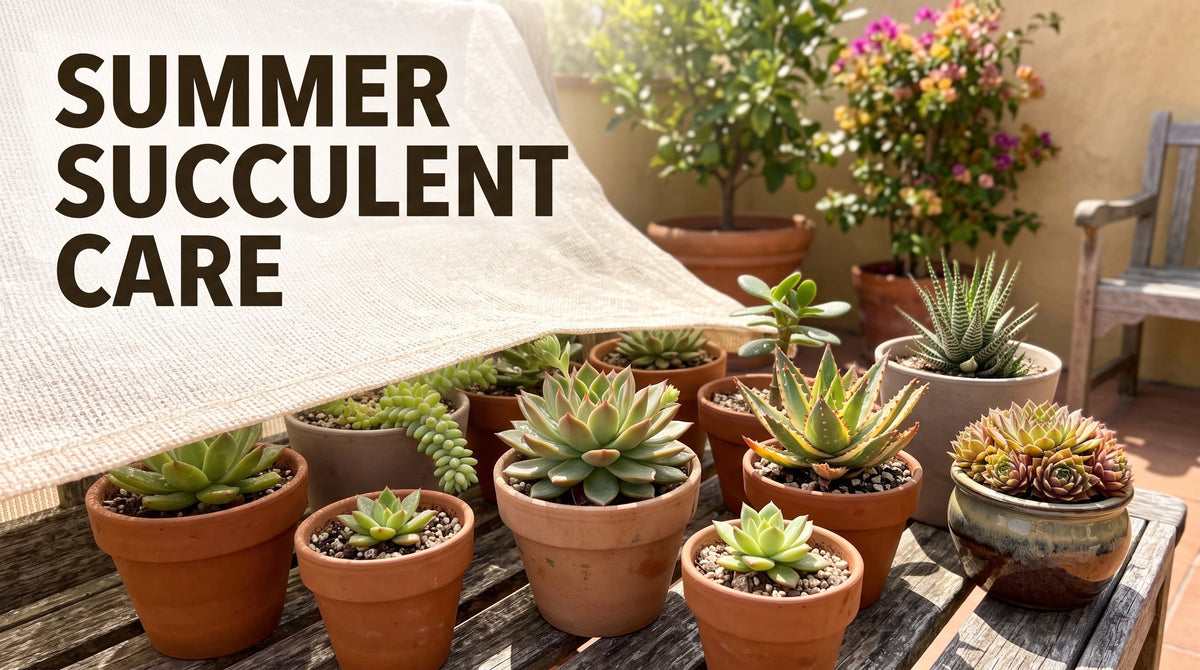
How to Care for Succulents in Summer: Heat and Sun Protection
Summer can be one of the most active and beautiful seasons for a succulent collection. Longer days, brighter light, and warmer temperatures can encourage healthy growth in many varieties.
But summer also brings several challenges.
Strong afternoon sunlight can scorch leaves. Terracotta pots can become extremely hot. Containers may dry faster outdoors, while poor airflow and excessive moisture can create problems for roots.
That means summer succulent care is not simply about giving plants more sunlight and more water.
The goal is to find the right balance between light, heat, moisture, airflow, and protection.
In this guide, you will learn how to care for succulents in summer, how to protect them from intense heat and sunlight, how to recognize sunburn and heat stress, and how to adjust your watering routine as temperatures rise.
Why Summer Care Is Important for Succulents
Many succulents naturally tolerate bright light, warm conditions, and periods of dryness. Their thick leaves and stems allow them to store water, which helps them survive dry environments.
However, not every succulent has exactly the same needs.
Some varieties can handle several hours of direct sunlight, while others prefer filtered light or partial shade. Tropical or forest-growing succulents may need substantially different conditions from desert-type plants.
Even a sun-loving succulent can experience damage if it is suddenly moved from a relatively low-light indoor location into intense outdoor sunlight.
University of Minnesota Extension recommends placing succulents outdoors in a semi-shaded, protected area when the weather warms and gradually moving them toward sunnier conditions. Sudden exposure to strong sunlight can cause leaf damage and sunburn.
The key summer principle is simple:
More sunlight does not always mean better growth.
Succulents need enough light, but they also need time to adjust to changes in light intensity.

Signs Your Succulent Is Struggling With Summer Heat
Heat stress can appear in several different ways.
Depending on the species and growing conditions, you may notice:
Leaves becoming pale or bleached
Brown or tan patches
Crispy leaf edges
Shriveled leaves
Leaves curling inward
Sudden leaf drop
Slow or stalled growth
Soil drying unusually quickly
A plant that looks stressed in summer may not necessarily need more water.
Sometimes the problem is excessive sunlight, reflected heat, poor airflow, or a combination of several environmental factors.
This is why it is important to look at the entire growing environment rather than reacting to one symptom.
How Much Sunlight Do Succulents Need in Summer?
There is no single sunlight requirement for every succulent.
Many common succulents prefer bright light and can tolerate direct sun once they are properly acclimated.
However, the intensity of outdoor summer sunlight can be much stronger than the light a plant receives through a window.
For plants that have been indoors, begin with bright filtered light or morning sun rather than immediately placing them in full afternoon sun.
After the plant has adjusted, you can gradually increase its exposure if the species tolerates stronger sunlight.
University of Minnesota Extension specifically recommends avoiding hot, intense sunlight during the middle of the day when acclimating succulents outdoors.
The RHS also notes that succulents generally enjoy bright light but that some types, particularly certain tropical or forest-growing succulents, prefer more sheltered or semi-shaded conditions.
Morning Sun vs. Afternoon Sun
Morning sunlight is often easier for a recently moved outdoor succulent to tolerate than intense afternoon sunlight.
A patio or balcony that receives gentle morning sun followed by afternoon shade can be a useful location for sensitive varieties.
If your succulent is already accustomed to strong direct light, it may tolerate more sun.
However, always consider the individual plant.
A small Haworthia, a jade plant, an Echeveria, and a Christmas cactus should not automatically be treated as if they have identical summer light requirements.
How to Acclimate Succulents to Stronger Sunlight
Acclimation is one of the most important summer-care steps.
If your succulent has been growing indoors, do not move it directly from a windowsill into intense outdoor sunlight for the entire day.
Instead, introduce it to outdoor conditions gradually.
Start by placing the plant in a bright, protected location.
Give it a limited amount of gentle morning sunlight.
After several days, increase the amount of light if the plant looks healthy.
Continue monitoring the leaves as you gradually move the plant toward its preferred location.
If you notice bleaching, brown patches, or crispy areas, reduce the intensity of the light and give the plant more protection.
University of Minnesota Extension notes that sudden exposure to direct outdoor sunlight can burn succulent leaves, so gradual acclimation is important.

How to Protect Succulents From Intense Summer Sun
If your plants are receiving too much direct sunlight, you do not necessarily need to move them completely indoors.
A better solution may be to modify the light.
You can use:
A covered patio
A porch
A balcony with afternoon shade
A spot beneath a tree with filtered light
A shade cloth
A location with morning sun and afternoon protection
The goal is to reduce the intensity of the hottest sunlight while maintaining good brightness.
For container plants, simply moving the pot a few feet can sometimes make a significant difference.
Avoid placing delicate succulents directly against hot walls, metal surfaces, or dark pavement where reflected and stored heat can increase the temperature around the plant.
Choosing the Right Summer Location
A good summer location should provide appropriate light, airflow, and protection from extreme conditions.
For many succulents, an outdoor location with bright morning sunlight and protection from the hottest afternoon rays can work well.
A covered porch can be particularly useful because it provides bright light while protecting plants from sudden heavy rain.
Good airflow is also valuable.
RHS guidance notes that cacti and succulents generally benefit from good ventilation, particularly during summer.
Avoid tightly grouping too many pots together.
Give air enough room to circulate around the plants.
This is especially important after watering or during periods of humid weather.
How to Water Succulents During Summer
Summer watering can be confusing.
It is easy to assume that hot weather automatically means succulents should be watered every day.
That is usually not the best approach.
Succulents store water in their leaves and stems, and many prefer the soil to dry between waterings.
Instead of following a fixed calendar, check the soil and consider the plant's growing conditions.
A succulent growing outdoors in a small container under bright sunlight may dry much faster than the same plant growing indoors.
When watering is needed, water thoroughly enough to moisten the growing medium and allow excess water to drain from the container.
Then allow the soil to dry appropriately before watering again.
University of Minnesota Extension recommends thorough watering followed by allowing the soil to dry completely between waterings for many cacti and succulents.
Why You Should Avoid Constantly Damp Soil
Heat does not eliminate the risk of overwatering.
In fact, repeatedly adding small amounts of water can keep parts of the soil moist for longer than expected.
Succulents generally need well-drained growing media and containers with drainage holes.
If water remains trapped around the roots, the plant can become vulnerable to root problems and rot.
The RHS similarly emphasizes that succulents prefer free-draining conditions and can suffer when they remain too wet.
Water Deeply Instead of Giving Tiny Sips
When your succulent needs water, avoid giving it only a small splash.
A thorough watering allows moisture to reach the root zone.
Then allow excess water to drain away.
Repeated shallow watering can encourage an inconsistent moisture pattern and may not properly hydrate the root system.
However, always consider the species, pot size, soil mix, temperature, and local humidity.
There is no universal summer watering schedule that works for every succulent.
Water Based on the Soil, Not the Calendar
A common beginner mistake is watering every Saturday simply because it is Saturday.
Your plants do not follow the calendar.
Instead, check the growing medium.
If the soil is still damp, wait.
If it has dried appropriately and the plant's growing conditions indicate that watering is needed, water thoroughly and allow excess moisture to drain.
During a heat wave, outdoor containers can dry much faster than indoor plants.
Check them more frequently, but do not automatically water every time the temperature rises.
How to Prevent Succulent Sunburn
Succulent sunburn can look like pale, tan, brown, or bleached patches on leaves.
It often occurs when a plant experiences stronger sunlight than it is accustomed to.
This is particularly common after moving indoor plants outside.
The best prevention is gradual acclimation.
Do not move a plant from a relatively shaded indoor location directly into several hours of intense afternoon sunlight.
Start with filtered light or gentle morning sun.
Increase exposure gradually.
If the plant develops signs of sunburn, move it to a less intense location.
Sunburned tissue generally will not return to its original appearance, but preventing additional damage gives the plant an opportunity to continue growing.
What to Do if Your Succulent Is Already Sunburned
First, reduce the intensity of the sunlight.
Move the plant to bright filtered light or morning sun.
Do not immediately respond by soaking the soil unless the plant actually needs water.
Check the growing medium first.
If the soil is dry and the plant is otherwise showing signs of needing water, water appropriately.
If the soil is already moist, additional water may create a different problem.
Leave damaged leaves in place unless they are dead or creating another issue.
Healthy new growth can eventually improve the overall appearance of the plant.
Should You Move Succulents Indoors During a Heat Wave?
Sometimes moving a container indoors temporarily can be helpful.
This can be especially useful for sensitive varieties or plants experiencing severe heat stress.
However, do not move an outdoor succulent into a dark room.
The indoor location should still provide adequate bright light.
Another option is to move the plant to a covered outdoor area where it receives bright filtered light and better protection from extreme afternoon heat.
The best solution depends on the species and the conditions around your home.
How to Protect Succulent Pots From Extreme Heat
The pot itself can become part of the heat problem.
Dark-colored containers can absorb substantial heat when exposed to intense sunlight.
Small containers can also dry rapidly.
Terracotta pots are porous and can help with drainage, but they may dry faster than less porous containers.
During periods of extreme heat, consider moving containers away from surfaces that absorb and radiate heat.
A covered patio, plant stand, or shaded section of a balcony can help.
You can also group compatible plants together while leaving enough space for airflow.

Do Succulents Need Fertilizer in Summer?
Many succulents grow actively during the warmer and brighter months, so summer can overlap with their growing season.
However, succulents generally do not require heavy feeding.
If you fertilize, use a suitable diluted fertilizer and follow the instructions for the specific plant.
University of Minnesota Extension notes that cacti and succulents have relatively low nutrient requirements and recommends limited fertilization during active growth.
Avoid assuming that more fertilizer will make a stressed plant recover faster.
If a plant is struggling with extreme heat, sunburn, or root problems, correcting the growing conditions should come first.
Summer Rain and Succulents
Summer storms can create a different problem from drought.
A succulent that receives repeated heavy rainfall may remain wet for too long, particularly if the soil drains poorly.
If your area experiences frequent summer storms, consider placing potted succulents under a covered area.
This is especially useful for plants that prefer drier conditions.
Always make sure containers have drainage holes.
If water collects inside a decorative cachepot, empty it rather than allowing the plant to sit in standing water.
RHS guidance emphasizes free-draining conditions for many succulents and warns against excessive moisture.
How to Care for Indoor Succulents During Summer
Indoor succulents can also experience summer problems.
A plant sitting directly against hot glass may receive much stronger heat and sunlight than expected.
If the window receives intense afternoon sun, consider moving the plant slightly away from the glass or using a sheer curtain to filter the strongest rays.
Keep the room well ventilated when possible.
Do not increase watering simply because it is summer.
Indoor conditions can be very different from outdoor conditions.
Check the soil and observe the plant before deciding whether it needs water.
Summer Care for Succulents on a Balcony
Balconies can become surprisingly hot.
Concrete, glass, metal railings, and walls can absorb heat throughout the day.
A balcony that feels comfortable in the morning may become much hotter in the afternoon.
Place succulents where they receive appropriate light without being trapped against a heat-reflecting wall.
A plant stand can improve airflow and prevent pots from sitting directly on hot surfaces.
If the balcony receives intense afternoon sunlight, consider filtered light or temporary shade during the hottest part of the day.
Summer Care for Succulents in a Garden
Garden-grown succulents have different needs from potted plants.
Established outdoor succulents growing in suitable soil may tolerate summer conditions well.
However, newly planted specimens may need more attention while their root systems establish.
Well-drained soil is especially important.
Avoid planting succulents in areas where water regularly collects after rain.
A slightly raised or sloped location can improve drainage.
Also remember that neighboring plants, walls, trees, and structures can change the amount of sunlight a succulent receives throughout the day.
Common Summer Succulent Mistakes
Several summer mistakes are particularly common among beginners.
Moving indoor succulents directly into full sun is one of the biggest.
Another is watering on a fixed schedule without checking the soil.
Other mistakes include keeping plants in containers without drainage holes, placing pots on extremely hot surfaces, ignoring airflow, and assuming every succulent requires the same amount of sunlight.
Avoiding these simple mistakes can make summer care much easier.
A Simple Summer Succulent Care Routine
You do not need to spend hours caring for your plants.
A simple routine can be enough.
Check the plants regularly.
Look at the leaves for signs of sunburn or heat stress.
Check the soil before watering.
Make sure water can drain freely.
Observe whether the plant is receiving too much intense afternoon sunlight.
Check that air can move around the containers.
After heavy rain, check whether the growing medium remains excessively wet.
If a plant is newly moved outdoors, monitor it more closely while it adjusts.
This routine helps you respond to the actual conditions instead of relying on a fixed schedule.
Summer Succulent Care Checklist
Before the hottest part of summer arrives, check the following:
Succulents are receiving appropriate light.
Recently moved plants have been acclimated gradually.
Sensitive varieties have protection from intense afternoon sun.
Containers have drainage holes.
Growing media drain well.
Soil is checked before watering.
Plants are not sitting in standing water.
Containers are protected from extreme reflected heat.
There is enough airflow around the plants.
Damaged or stressed plants are monitored regularly.
This simple checklist can prevent many common summer problems.
Final Thoughts
Summer can be an excellent season for growing and enjoying succulents, but healthy summer care is about balance.
Succulents generally appreciate bright light and well-drained conditions, yet intense sunlight, extreme heat, sudden environmental changes, and excessive moisture can still cause problems.
The most important step is to understand your individual plant.
If a succulent has been growing indoors, gradually introduce it to stronger outdoor light. Provide filtered light or afternoon protection when necessary, especially during extreme heat.
Water thoroughly when the plant actually needs it, then allow the growing medium to dry appropriately. Make sure every container drains well and avoid leaving roots in standing water.
With the right combination of light, airflow, drainage, and careful watering, your succulents can stay healthy and attractive throughout the summer.
And when the seasons change, you can continue your seasonal care routine with our guide to How to Protect Succulents in Winter: Cold Weather Care Tips.
Together, these seasonal guides can help you adjust your succulent care as temperatures and light conditions change throughout the year.