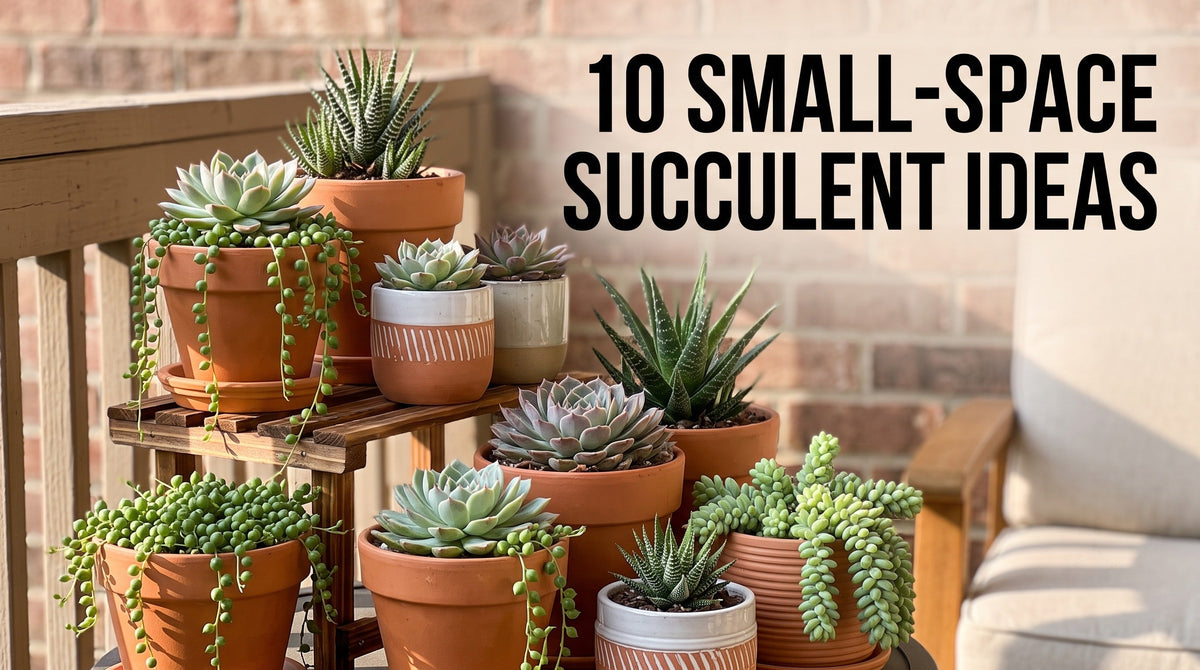
10 Succulent Container Garden Ideas for Small Spaces
You do not need a large yard to enjoy a beautiful succulent garden.
A sunny balcony, small patio, windowsill, porch step, or even a compact tabletop can become a charming growing space with the right container and a few carefully chosen succulents.
Container gardening is especially useful when outdoor space is limited because you can control where plants are placed, rearrange the display when needed, and create different looks without building a permanent garden bed.
The key is to choose containers with good drainage, use an appropriate growing mix, match plants with similar care requirements, and pay attention to the amount of light available.
Here are 10 practical succulent container garden ideas for making the most of a small space.
Why Grow Succulents in Containers?
Succulents naturally lend themselves to container gardening because many varieties have compact growth habits and attractive shapes.
A single pot can become a simple focal point, while several small containers can create a miniature collection.
Containers also make it easier to move plants when seasonal conditions change or when a particular location receives too much or too little sunlight.
However, succulents are not all identical. Different varieties can have different requirements for light, watering, temperature, mature size, and growth habit.
Before combining several plants in one container, make sure their basic growing requirements are compatible.
Good drainage is particularly important because excess moisture around succulent roots can contribute to rot and other problems. University of Minnesota Extension recommends pots with drainage holes and well-drained growing media for cacti and succulents.
-
Create a Sunny Balcony Succulent Garden
A balcony can become an excellent home for a small collection of potted succulents.
Instead of filling the entire floor with pots, use a combination of different container sizes.
Place a few larger plants toward the back and smaller pots toward the front. This creates layers without taking up too much usable space.
A simple balcony arrangement might include:
One larger architectural succulent
Two or three medium-sized rosette succulents
Several small accent plants
One shallow container filled with low-growing varieties
Choose plants according to the actual light conditions on your balcony rather than assuming every succulent will tolerate the same amount of direct sun.
If plants are being moved from lower light to stronger outdoor sunlight, introduce them gradually. Many succulents benefit from bright light, but sudden exposure to intense sunlight can cause damage.
Also consider the weight of large containers and the safety requirements of your balcony before creating a large display.

-
Build a Small Patio Succulent Corner
A patio does not need a large garden bed to look inviting.
Choose one corner and create a compact succulent display using pots of different heights.
For example, you could use:
A tall pot with an upright succulent
A medium ceramic pot with a rosette-forming plant
A low bowl with several small succulents
A small pot placed on a plant stand
The different heights make the display look fuller while keeping the footprint relatively small.
If your patio receives strong afternoon sunlight, observe the plants regularly and make adjustments according to how they respond.
Some succulents prefer abundant light, while others can be more sensitive to intense conditions.
-
Make a Windowsill Succulent Collection
A windowsill is one of the simplest options for a small indoor succulent garden.
Instead of choosing plants simply because they look attractive together, consider the amount and direction of light your window provides.
A bright, sunny window can work well for many succulents, while a darker location may require supplemental lighting.
Try arranging three to five small pots in a row.
You can make the collection more interesting by varying:
Pot height
Pot shape
Leaf color
Rosette size
Plant texture
The plants do not need to match perfectly.
In fact, a simple mixture of shapes can make a small windowsill collection feel more like a miniature garden.
Rotate the containers occasionally if the plants are receiving uneven light.

-
Design a Mini Succulent Bowl
A shallow bowl can become a beautiful centerpiece for a small table, shelf, or outdoor seating area.
Choose plants with similar watering and light requirements so that they can be cared for together.
For example, you might combine several small rosette-forming succulents with a low-growing variety around the edges.
When creating a mixed container, leave enough room for each plant to grow.
It can be tempting to pack a small bowl with as many succulents as possible, but overcrowding can make watering, airflow, and future growth more difficult.
A little empty space can actually make the arrangement look more intentional.
-
Try a Vertical Succulent Display
When floor space is limited, think vertically.
A narrow plant shelf, wall-mounted planter, tiered stand, or sturdy vertical display can hold several small succulent containers without requiring a large footprint.
Arrange the plants so that taller containers do not block light from smaller plants.
You can also use different pot heights to create a cascading visual effect.
For a very small balcony or patio, vertical organization can turn an otherwise unused wall or corner into a compact plant display.
Always make sure shelves and wall-mounted planters are securely installed and appropriate for the weight of wet soil and containers.

-
Create a Small Succulent Garden on a Plant Stand
A plant stand can turn several individual pots into one coordinated display.
This is especially useful when you want the appearance of a garden without planting everything together.
Try a three-level arrangement:
Top level: one visually striking succulent
Middle level: two medium-sized plants
Bottom level: several smaller pots
This arrangement makes use of vertical space while keeping each plant in its own container.
Keeping plants separate also gives you more control if one variety needs different watering or light conditions.
You can move individual pots instead of disturbing the entire arrangement.
-
Make a Rustic Succulent Container With Natural Materials
Succulents pair naturally with materials such as terracotta, stone, wood, and weathered containers.
For a rustic look, choose a simple terracotta pot and combine it with a small selection of succulents that have contrasting forms.
You could pair:
A rounded rosette
A trailing succulent
A vertical accent plant
A small ground-covering variety
Keep the design simple.
The natural colors and textures of the plants can provide enough visual interest without adding too many decorative elements.
Most importantly, make sure the container still provides adequate drainage.
A decorative container without a drainage hole can create problems even if the soil itself is well drained.
-
Turn a Small Table Into a Succulent Garden
A coffee table, outdoor side table, or small garden table can become a miniature succulent display.
Instead of using one large container, arrange several small pots across the surface.
Use three basic sizes:
Small
Medium
Large
Place the largest container slightly toward the back and arrange smaller pots around it.
Leave enough open space so the display does not become visually crowded.
This approach works particularly well for patios, balconies, porches, and small outdoor seating areas.
It also makes it easy to change the arrangement whenever you want a new look.
-
Create a Color-and-Texture Succulent Collection
You can create an impressive container garden without relying on flowers.
Succulents naturally offer a wide range of shapes and textures.
Look for differences such as:
Rounded leaves
Pointed leaves
Tight rosettes
Tall upright growth
Trailing stems
Blue-green foliage
Green foliage
Red or purple tones under suitable growing conditions
Rather than choosing plants only by color, combine different shapes.
For example, a compact rosette can provide a focal point while a trailing plant softens the edge of the container.
Just remember that color can change depending on light, temperature, season, and growing conditions.
Choose plants primarily for compatible care requirements, then use their different forms and colors to create visual interest.
-
Build a Flexible Small-Space Succulent Garden
One of the best things about container gardening is flexibility.
You do not have to decide on one permanent arrangement.
Create a collection of individual pots and rearrange them throughout the year according to the plants' needs and the conditions in your space.
For example, you might keep sun-loving plants in the brightest area while moving more sensitive varieties to a protected location.
This flexible approach can be particularly useful for gardeners who have changing seasonal light or limited outdoor space.
It also makes it easier to isolate a plant if you notice pests, damage, or signs of watering problems.
How to Choose the Right Containers
The container itself is one of the most important parts of a succulent garden.
Look for pots with drainage holes that allow excess water to escape.
The container should also be appropriately sized for the plant's root system. An extremely large pot is not always better, particularly when the plant grows slowly and the soil remains wet for too long.
University of Minnesota Extension recommends drainage holes for succulents because excess water trapped in the growing medium can lead to rot and decay.
Utah State University Extension also emphasizes that containers need adequate drainage and enough space for the plants' roots.
Terracotta pots are popular because they are simple, attractive, and breathable, but the best container depends on the plant, climate, location, and watering habits.
Choosing the Right Soil for Container Succulents
Avoid treating ordinary garden soil as the default choice for a small succulent container.
Succulents generally perform best in a growing medium that drains well.
University of Minnesota Extension notes that many cacti and succulents naturally grow in well-drained, sandy conditions and recommends a porous potting mix for container growing.
A commercial cactus or succulent mix can be a convenient starting point.
The exact mix may need adjustment depending on the plant and local conditions.
The goal is to avoid a container that stays saturated for extended periods.
Remember that drainage depends on more than just adding rocks or gravel. The container's drainage holes, growing medium, watering habits, and environmental conditions all affect how quickly excess water leaves the root zone.
How to Water Succulents in Containers
Container succulents should not automatically be watered on a fixed calendar.
Instead, pay attention to the plant and growing medium.
Light levels, temperature, container size, plant size, humidity, wind, and season can all affect how quickly the soil dries.
When watering, water thoroughly enough for excess water to flow from the drainage hole, then allow the growing medium to dry according to the needs of the particular succulent before watering again.
University of Minnesota Extension specifically advises allowing succulent soil to dry between waterings and warns against repeated shallow watering.
A sunny balcony may require different watering attention from an indoor windowsill.
That is why checking the actual condition of the soil is more useful than following a universal watering schedule.
How to Arrange Succulents in a Small Container
If you are creating a mixed container, start by placing the plants in their nursery pots before planting.
Move them around until you find an arrangement you like.
A simple design can use:
One focal plant
One or two supporting plants
One trailing or spreading plant
Some open space around the edges
Think about how large each plant may become.
A container that looks perfect on planting day can become crowded later if the plants have very different growth rates.
University of Minnesota Extension recommends choosing succulents with compatible growth rates and similar water requirements when grouping them together.
Balcony and Patio Tips
Small outdoor spaces can change quickly throughout the day.
A balcony may receive strong reflected heat from walls or glass.
A patio may have full sun in the morning and shade later in the afternoon.
Before choosing plants, observe your space for several days.
Notice:
Where direct sunlight reaches
How long the area stays sunny
Whether the space becomes very hot
Whether rain reaches the containers
How quickly the soil dries
Whether strong wind affects the plants
This information can help you choose a more suitable arrangement.
Containers can also dry faster in sunny or windy conditions, so check them regularly rather than assuming the same watering schedule will work everywhere.
Windowsill Tips
Indoor succulents need sufficient light to maintain healthy growth.
A bright window can be helpful, but the exact amount of light needed varies by species.
If a succulent begins stretching toward the light, develops weak elongated growth, or loses its compact shape, the plant may not be receiving enough light.
A grow light can supplement natural light when necessary.
Keep the containers away from locations where they are exposed to prolonged cold drafts or extreme temperature changes.
Small Space Design Tricks
You can make a tiny succulent garden look larger by using a few simple design techniques.
Use different pot heights.
Group plants in odd numbers.
Mix round and angular containers.
Leave some negative space.
Use a vertical shelf.
Repeat one pot material or color.
Combine different leaf shapes.
Place the tallest plant toward the back.
Keep smaller plants toward the front.
Avoid filling every available inch.
A little empty space helps individual plants stand out.
Common Mistakes to Avoid
Using containers without drainage holes
This is one of the most important problems to avoid.
Decorative pots can look beautiful, but if excess water cannot escape, succulent roots may remain wet for too long.
Overcrowding the container
A container can look full immediately after planting but become crowded as the plants grow.
Mixing plants with very different watering needs
A mixed container is easier to manage when the plants have similar basic requirements.
Putting every succulent in full sun immediately
Plants that have been growing in lower light may need gradual acclimation before stronger outdoor sunlight.
Watering on a rigid schedule
Environmental conditions change. Check the growing medium and plant rather than following a calendar blindly.
Using too much decorative gravel
A decorative top dressing can make a container look finished, but it should not be treated as a substitute for proper drainage.
Choosing pots that are too large
A large volume of wet soil can remain moist longer than a small succulent needs.
Forgetting about mature size
Always consider how large the plant is likely to become, not just how it looks when purchased.
How to Keep a Small Succulent Container Garden Looking Good
Once your containers are established, maintenance can be relatively simple.
Remove dead leaves when appropriate.
Watch for pests.
Rotate plants if growth becomes noticeably one-sided.
Move containers when seasonal light changes.
Check drainage holes periodically.
Adjust watering as weather and light conditions change.
Prune or remove plants that outgrow a mixed arrangement.
If one succulent develops significantly different care needs, consider moving it into its own container.
Keeping individual plants in separate pots is not a failure of design. It can actually make a small garden easier to manage.
Final Thoughts
A small space can still support a beautiful succulent collection.
Whether you have a balcony, patio, windowsill, porch, tabletop, or only a narrow corner, containers give you plenty of ways to create a miniature garden.
Try a sunny balcony arrangement, a rustic patio collection, a windowsill display, a vertical plant shelf, or a simple bowl filled with compatible succulents.
Focus first on drainage, suitable soil, light, and compatible care requirements. Once those basics are right, you can experiment with color, texture, height, and container style.
And if you want to expand your outdoor succulent collection beyond containers, our guide to the best succulents for outdoor gardens can help you explore additional choices for outdoor spaces.