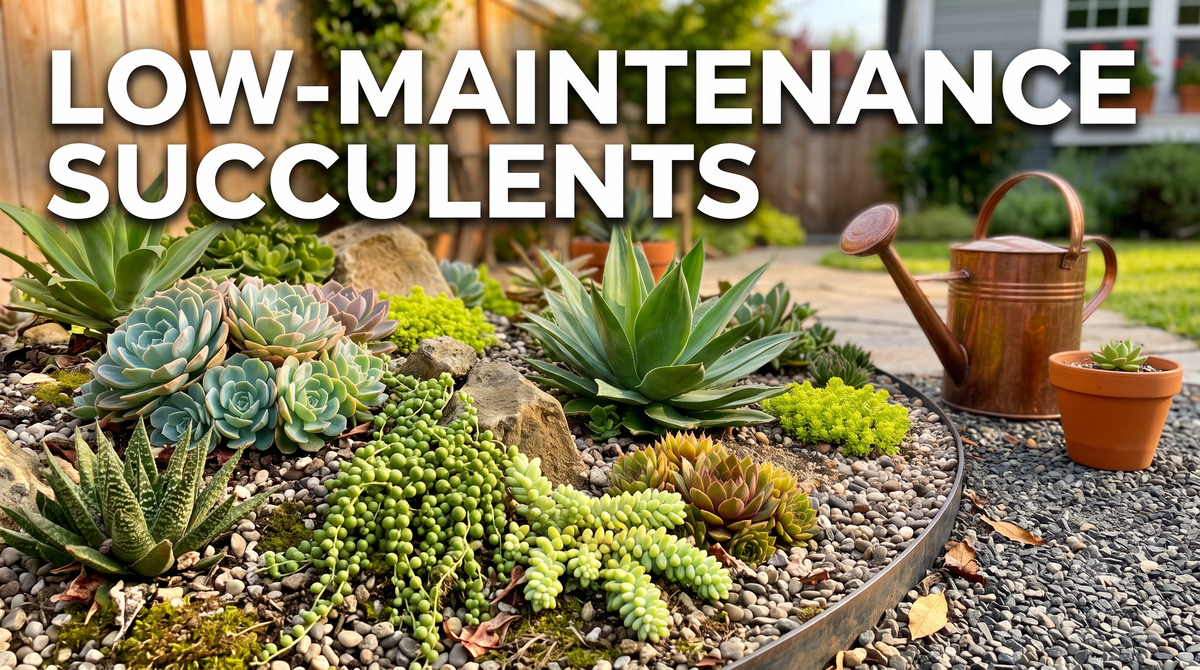
How to Build a Low-Maintenance Succulent Garden
A succulent garden can be beautiful without becoming another high-maintenance project on your weekly to-do list. The key is not simply choosing plants that need less water. A truly low-maintenance succulent garden starts with the right location, well-draining soil, suitable plants, thoughtful spacing, and a watering routine that works with your local conditions.
Succulents naturally store water in their leaves, stems, or roots, which helps many species handle periods of dryness. However, they still need the right growing conditions. Most succulents prefer plenty of light, well-drained soil, and a wet-dry watering cycle rather than constantly moist soil.
If you are starting with containers or working with a small space, you may also want to see these 10 Succulent Container Garden Ideas for Small Spaces before expanding into a larger garden.
The goal of this guide is simple: build a succulent garden that looks good, uses water efficiently, and requires less day-to-day attention.
If you are starting with containers or working with a small space, you may also want to see these 10 Succulent Container Garden Ideas for Small Spaces before expanding into a larger garden.
Start With the Right Garden Location
The easiest way to reduce maintenance is to choose a location that already suits the plants you want to grow.
Before planting, observe your garden for a few days. Notice how much sunlight reaches the area, whether rainwater collects there, how quickly the soil dries, and whether nearby trees or buildings create shade.
Most succulents prefer bright light, but the exact amount varies by species. A location that works beautifully for one succulent may be too shady or too intense for another.
Avoid choosing a location simply because it looks attractive. A beautiful garden spot with poor drainage can create much more work later.
If the area regularly stays wet after rain, investigate the drainage before planting. Poorly drained soil can keep roots wet for too long and increase the risk of root problems.
Design the Garden Around Less Work
A low-maintenance garden should be easy to understand and easy to reach.
Instead of filling every available space with plants, create a simple layout with clear groups and enough room to inspect each plant.
Consider using:
• A defined planting area
• A small number of repeating plant varieties
• Rocks or decorative gravel as visual accents
• Open spaces between mature plants
• A simple edge around the garden
• Accessible paths or stepping stones where needed
A simple design can actually make a succulent garden look more intentional.
You also want to avoid creating tiny planting pockets that are difficult to water, weed, or inspect. Grouping plants into larger, organized sections can make routine care much faster.

Choose Succulents With Similar Needs
One of the most important secrets to a low-maintenance succulent garden is choosing plants that can live under similar conditions.
Do not select plants based only on appearance.
Instead, consider:
• Light requirements
• Water requirements
• Mature size
• Cold tolerance
• Heat tolerance
• Growth habit
• Soil preferences
Grouping plants according to similar water needs is especially useful. Low-water landscape guidance commonly recommends grouping plants with similar irrigation requirements so that one section does not need frequent watering while another section prefers to stay much drier.
For example, you might create one sunny, dry section for drought-tolerant succulents and another area with slightly different conditions for plants that prefer more protection.
This is much easier than trying to give every plant its own watering schedule.
Pick Easy-Care Succulents
There is no single list of succulents that will be low-maintenance in every climate.
Your best choices depend on where you live and whether the plants will grow indoors, outdoors, in containers, or directly in the ground.
However, many gardeners can explore adaptable groups such as:
• Sedum
• Sempervivum
• Echeveria
• Crassula
• Aloe
• Agave
• Some hardy Opuntia
• Certain Kalanchoe
• Other locally adapted succulent species
Always check the specific species or cultivar before planting large numbers.
A succulent that is easy to grow in a dry climate may require more protection in a humid or cold climate. Likewise, a plant described as cold hardy may only tolerate certain temperatures or conditions.
For an outdoor garden, locally adapted plants are often a practical starting point because they are more likely to fit your seasonal conditions.
Build the Soil for Easy Maintenance
Good soil can save you from many future problems.
Succulents generally perform best in soil that drains efficiently rather than remaining wet for long periods. Poor drainage can lead to stressed roots and root rot.
For containers, use a commercial cactus or succulent mix, or create a porous mix appropriate for the plants you are growing.
For an in-ground garden, test the existing soil before planting. Heavy, compacted soil may need improvement, or you may need to create raised planting areas where drainage is better.
Do not assume that adding a layer of gravel underneath the planting soil will automatically fix poor drainage. A gravel layer is not a substitute for a container drainage hole, and garden drainage problems often need to be addressed through the soil structure and site design itself.
The objective is simple: after watering or rainfall, excess water should be able to move away from the root zone.
Use Containers With Drainage Holes
If part of your low-maintenance succulent garden includes containers, choose pots with drainage holes whenever possible.
A decorative container without drainage may look attractive, but it can make watering much harder to manage because excess water has nowhere to escape.
Terracotta pots can also be useful because their porous material can help the growing medium dry more quickly.
Choose a container that is appropriate for the plant's root system rather than automatically selecting a very large pot. Excessively large amounts of wet soil can take longer to dry.
If you have a decorative pot without a drainage hole, consider using it as an outer container while keeping the succulent in a properly draining nursery or growing pot inside.
Create a Simple Watering Routine
A low-maintenance garden does not mean a no-water garden.
The goal is to water thoroughly when the plants actually need it, then allow the soil to dry appropriately before watering again.
Avoid watering simply because it is a particular day of the week.
Instead, check the soil and consider the current conditions.
Your watering routine may need to change because of:
• Rainfall
• Temperature
• Season
• Sun exposure
• Soil type
• Container size
• Plant size
• Humidity
• Air circulation
For many container-grown succulents, a useful starting point is a wet-dry cycle: water thoroughly so the root zone is moistened, allow excess water to drain away, and then wait until the soil has dried before watering again.
Iowa State University Extension notes that watering frequency can vary substantially with soil type, light, humidity, and container type, so a fixed calendar is not a reliable rule for every succulent garden.

A simple routine might look like this:
Check → water thoroughly when needed → allow excess water to drain → let the soil dry → check again.
This approach is easier to maintain than giving small amounts of water every few days.
Avoid Frequent Light Sprinkling
One common mistake is giving succulents a small splash of water repeatedly.
Frequent shallow watering can keep the upper soil damp without providing a useful wet-dry cycle.
When watering is needed, water thoroughly and let the excess drain away. Then allow the soil to dry appropriately.
University of Minnesota Extension recommends thorough watering followed by complete drying between waterings for many cacti and succulents.
Of course, individual species and growing conditions can differ, so adjust the routine rather than treating this as a rigid rule.
Make Rain Work for You
Rain can reduce the amount of supplemental watering your garden needs, but only if the garden drains well.
Observe what happens after a heavy rain.
Does water disappear reasonably quickly?
Or does it remain pooled around the plants?
Standing water is a warning sign that the garden design or soil may need attention.
If necessary, create raised planting areas, improve the soil structure, adjust the slope, or move moisture-sensitive succulents to better-drained locations.
The goal is not to prevent every drop of rain from reaching your succulents. The goal is to make sure excess water does not remain around their roots for too long.
Keep Plants Spaced Properly
It can be tempting to plant succulents close together because a full garden looks beautiful immediately.
However, remember that small plants can become much larger.
Give each plant enough room for its mature size and growth habit. Adequate spacing also makes it easier to inspect leaves, remove weeds, clean up damaged growth, and spot pests or disease early.
A slightly more open arrangement can actually make a succulent garden easier to maintain and can create a more natural appearance as the plants mature.
Use Rocks and Gravel Strategically
Rocks can make a succulent garden look finished without requiring much ongoing care.
Use larger rocks as structural elements and smaller stones or gravel as decorative accents around plants.
You can create:
• A dry riverbed effect
• A desert-inspired garden
• A minimalist rock garden
• A layered hillside
• A small succulent island
• A geometric modern garden
But decorative gravel should not be treated as a cure for poor soil drainage.
Think of rocks as part of the garden's design rather than a replacement for good soil and proper site preparation.
Limit High-Maintenance Features
If your goal is low maintenance, be selective about what you add.
A complicated garden with dozens of species, delicate plants, decorative structures, and different irrigation requirements can quickly become difficult to manage.
Instead, focus on a few strong design elements.
For example, three or four repeating succulent varieties can create a cohesive look without requiring you to remember the needs of twenty different plants.
You can add visual variety through differences in:
• Shape
• Color
• Texture
• Height
• Rosette form
• Spreading growth
• Upright growth
This creates interest without adding unnecessary maintenance.
Keep Fertilizing Simple
Succulents generally have relatively low fertilizer requirements.
Over-fertilizing is not a shortcut to a healthier low-maintenance garden.
If fertilizer is needed, follow the recommendations for the specific plant and product you are using. Many succulents are fertilized during active growth and receive little or no fertilizer during less active periods.
University of Minnesota Extension notes that cacti and succulents generally have modest nutrient requirements.
For a low-maintenance approach, focus first on appropriate light, soil, drainage, watering, and plant selection.
Those fundamentals matter more than creating a complicated fertilizer schedule.
Make Seasonal Adjustments
Your succulent garden will not need exactly the same care throughout the year.
During periods of stronger sunlight and active growth, some plants may use water more quickly.
During cooler, darker, or wetter periods, the soil may remain moist for longer.
That means your watering routine should change with the garden rather than forcing the garden to follow a fixed schedule.
Before watering, ask:
Is the soil actually dry?
Has it rained recently?
Has the temperature changed?
Is the plant actively growing?
Is the container drying at the same rate as before?
These quick checks can prevent unnecessary watering.
Watch for Signs of Trouble Early
Low-maintenance does not mean ignoring your plants.
A quick inspection once or twice a week can prevent small problems from becoming larger ones.
Look for:
• Soft or mushy leaves
• Yellowing leaves
• Sudden leaf drop
• Shriveling
• Brown or scorched patches
• Unusual stretching
• Pests
• Persistent wet soil
• Damaged stems
Overwatering is one of the most common succulent problems. Yellowing, soft leaves and stems, and prolonged wet soil can indicate excessive moisture. On the other hand, severe underwatering can also cause shriveling and leaf drop.
This is why it is important to consider the entire growing environment instead of reacting to one symptom by automatically adding more water.
A Five-Minute Weekly Maintenance Routine
Once your garden is established, maintenance can be surprisingly simple.
Choose one day each week for a quick inspection.
Start by walking around the garden and checking the plants.
Remove dead leaves and obvious debris.
Look for pests or damaged growth.
Check soil moisture in areas that seem dry.
Look at plants that appear unusually soft, stretched, shriveled, or discolored.
Remove weeds while they are still small.
Check containers and drainage areas after rain.
You do not need to perform every task every week. The purpose of this quick inspection is to catch problems early.
That is often much easier than trying to rescue several neglected plants at the end of the season.

How to Make Your Succulent Garden Even Easier
If you want to reduce maintenance even further, use these principles when designing the garden:
Choose plants that match your climate.
Group plants with similar water needs.
Use well-draining soil.
Make drainage a priority before planting.
Choose containers with drainage holes.
Avoid planting too densely.
Use a simple watering routine based on soil conditions.
Reduce unnecessary fertilizer and treatments.
Keep the garden easy to access.
Inspect plants regularly.
This is the basic philosophy behind a low-maintenance succulent garden: make the growing environment work for the plants instead of constantly correcting problems later.
A Simple Low-Maintenance Succulent Garden Plan
If you are starting from scratch, you can keep the design very simple.
First, choose a bright location with suitable drainage.
Next, prepare the soil or create raised planting areas if the existing soil drains poorly.
Then select three to five succulent types that have similar light and water requirements.
Place the larger plants first, followed by medium-sized plants and spreading varieties.
Leave enough space for mature growth.
Add rocks or gravel as design elements.
Water the newly planted garden appropriately while the plants establish, then transition toward a wet-dry routine suited to your soil, climate, and plants.
Finally, create a simple weekly inspection habit.
The result does not need to be large or complicated. Even a small, carefully designed succulent bed can provide a strong garden focal point while keeping routine maintenance manageable.
Final Thoughts
The easiest succulent garden to maintain is usually the one that was designed correctly from the beginning.
Choose the right location, improve drainage, select plants with compatible needs, leave enough growing space, and create a watering routine based on actual soil and weather conditions.
Once those foundations are in place, succulent care becomes much more predictable.
And if you are working with a balcony, patio, windowsill, or another compact area, start small. A well-designed collection of a few healthy plants can be easier to maintain and more attractive than a crowded garden filled with plants that all need different care.
A low-maintenance succulent garden is not about doing nothing. It is about making smart choices early so that there is less work to do later.