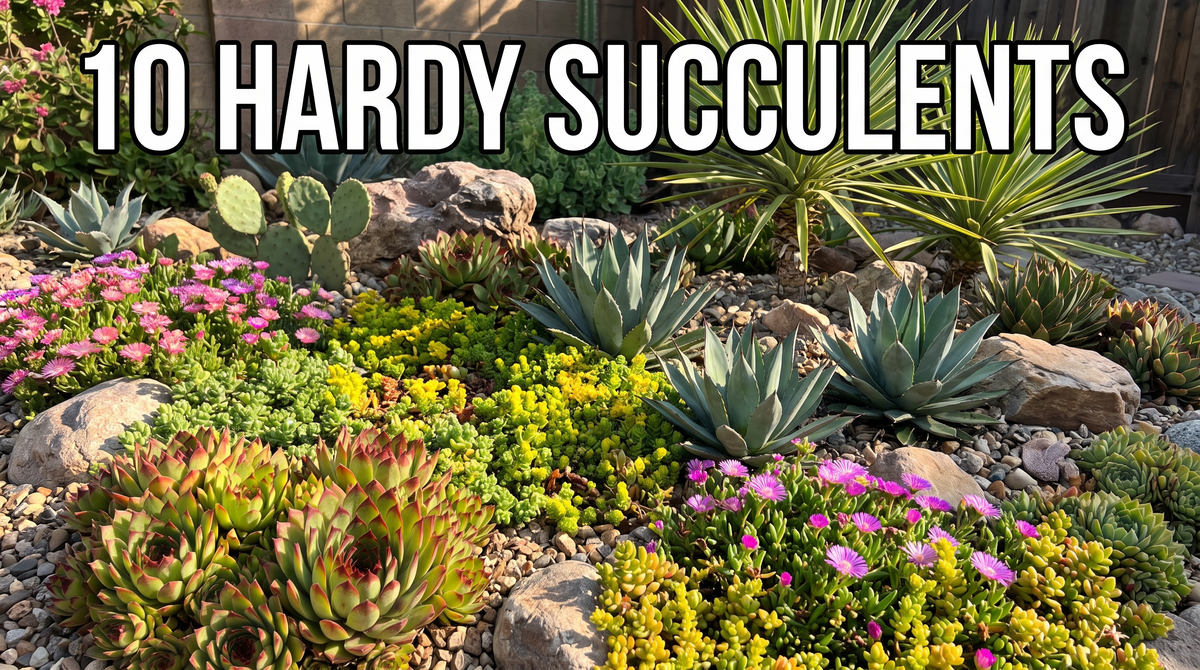
Best Succulents for Outdoor Gardens: 10 Hardy Choices
Succulents can be excellent choices for outdoor gardens because many have fleshy leaves or stems that help them store water. Their unusual shapes, textures, and colors can add year-round interest to rock gardens, raised beds, borders, patios, and containers.
But not every succulent is equally suited to outdoor growing.
Some varieties are better for warm climates, while others can tolerate cold winters and seasonal temperature changes. Some prefer full sun, while others benefit from protection from intense afternoon heat.
The right plant depends on your local climate, soil, drainage, light conditions, and the specific species or cultivar.
If you want to build an outdoor succulent garden, these 10 choices are worth considering.

-
Sempervivum
Sempervivum, commonly called hens and chicks, is one of the classic choices for outdoor succulent gardens.
These plants form compact rosettes and produce offsets around the mother plant. Over time, a single plant can develop into a beautiful cluster.
Sempervivum is particularly useful for rock gardens, borders, shallow containers, and other locations where excellent drainage is available.
Its compact shape also makes it easy to combine with rocks, gravel, and other architectural garden elements.
One of its biggest advantages is its tolerance of challenging outdoor conditions when the particular species or cultivar is suited to the local climate.
However, cold tolerance varies by plant, so check the hardiness information for the variety you are buying.
Sempervivum is especially attractive when several colors and forms are combined in one container or garden bed.
-
Sedum
Sedum is a large and diverse group that includes many excellent outdoor garden plants.
Some sedums form low-growing mats, while others develop upright clumps.
Low-growing types can work well between rocks, along pathways, or as ground-cover-style plantings.
Upright sedums can add more height to perennial borders and mixed beds.
Many Sedum species have fleshy foliage and relatively modest water requirements once established in suitable conditions.
Their flowers can also provide seasonal color.
When choosing a Sedum for your garden, pay attention to the exact species or cultivar rather than assuming every Sedum has identical hardiness.
For example, some garden sedums are much more suitable for cold climates than tender succulent species commonly sold as houseplants.
A well-drained, sunny location is often a good starting point.
-
Delosperma
Delosperma, often called ice plant, is another useful choice for outdoor succulent gardens.
Many Delosperma varieties form low, spreading mats that can work beautifully in rock gardens, along walls, and in dry garden beds.
The plants can produce colorful daisy-like flowers, making them especially attractive when you want both succulent foliage and seasonal blooms.
Some Delosperma species are used as hardy ground covers in appropriate climates.
Their low-growing habit also makes them useful around larger rocks or at the front edge of a garden bed.
Good drainage is important.
Although these plants can tolerate dry conditions, that does not mean they should be planted in heavy, constantly wet soil.
Choose a sunny location with soil that drains efficiently.
-
Opuntia
If you want an outdoor succulent with a strong architectural appearance, Opuntia is worth considering.
Commonly known as prickly pear cactus or bunny ears cactus depending on the species, Opuntia has distinctive flattened pads and can create a dramatic silhouette in the landscape.
Some species are remarkably cold tolerant, making them useful in outdoor gardens well beyond the warmest desert regions.
However, hardiness varies considerably among species.
Do not assume that every Opuntia can survive the same winter conditions.
Many varieties also have spines or glochids, so placement is important.
Avoid locations where children, pets, or people walking through the garden could easily brush against the plant.
A sunny location with excellent drainage can help Opuntia thrive.
In the right garden, it can become a striking focal point.
-
Yucca
Yucca brings a completely different shape to an outdoor succulent garden.
Instead of forming a low rosette like Sempervivum, many Yucca species develop strong, upright leaves that create a bold architectural effect.
Yucca can work well as a focal plant, in dry borders, rock gardens, and landscapes where a strong vertical form is desirable.
Some species are highly drought tolerant once established.
However, different Yucca species have different levels of cold tolerance and different mature sizes.
Always check the mature dimensions before planting one close to paths, windows, or structures.
Some Yucca plants also have sharp leaf tips, so placement deserves consideration.
With suitable sunlight and well-drained soil, Yucca can provide structure to an outdoor garden while requiring relatively little routine watering.
-
Agave
Agave is another dramatic choice for outdoor landscapes.
Its symmetrical rosettes and strong architectural leaves can make it an excellent centerpiece for a container or dry garden.
Some Agave species are quite cold tolerant, while others are better suited to warm climates.
This difference is extremely important.
If you live in an area with freezing winters, select a species or cultivar that is appropriate for your climate rather than choosing an Agave simply because it looks attractive at the garden center.
Many Agaves also have sharp leaf margins or terminal spines.
Give them enough space to grow without becoming a hazard near walkways.
Agaves generally appreciate abundant light and excellent drainage.
In a suitable climate, a mature Agave can become one of the most dramatic plants in an outdoor succulent collection.

-
Lewisia
Lewisia is a compact succulent-like perennial that can be an interesting choice for rock gardens and containers.
Its attractive rosettes and colorful flowers make it especially appealing when planted where the blooms can be viewed up close.
Lewisia generally benefits from excellent drainage, making it a natural candidate for rock gardens, raised containers, and other well-drained locations.
It is a good example of why drainage can be just as important as watering when growing outdoor succulents.
Rather than planting it in a heavy, constantly wet garden bed, consider a location where excess water can move away from the roots.
Its compact size also makes it useful for smaller outdoor spaces.
-
Hardy Ice Plant
Hardy ice plants in the Delosperma group can be excellent for gardeners looking for low-growing plants with colorful flowers.
Their spreading growth makes them useful for filling spaces between rocks or creating a carpet of foliage near the edge of a garden bed.
Once established in suitable conditions, many varieties are relatively drought tolerant.
The flowers can create a bright seasonal display that contrasts with the fleshy green foliage.
Because different species and cultivars vary in cold tolerance, choose a plant specifically recommended for your local climate.
Avoid treating all plants sold under the general name “ice plant” as interchangeable.
Some ice plants commonly sold in warm climates may not have the same cold tolerance as hardy Delosperma selections.
-
Hardy Stonecrop
Another excellent option for outdoor beds is a hardy stonecrop, particularly garden forms of Sedum and related Hylotelephium.
These plants can provide more height and structure than low-growing ground-cover sedums.
Many develop upright stems with fleshy leaves and clusters of small flowers.
They can fit naturally into perennial borders, mixed beds, rock gardens, and containers.
Hardy stonecrop can be particularly useful if you want your succulent garden to have different layers.
Place low-growing plants toward the front, medium-height plants in the middle, and taller stonecrop toward the back.
This creates visual depth without requiring a large collection of different plant families.
Choose varieties according to your local growing conditions and provide well-drained soil.
-
Hardy Aloe or Cold-Tolerant Aloe Species
Aloe is famous for its attractive fleshy leaves, but outdoor suitability varies significantly among Aloe species.
Some Aloes are best grown as houseplants or container plants that can be protected during cold weather.
Others are considerably more tolerant of outdoor conditions in appropriate climates.
If you want to grow Aloe outdoors year-round, choose a species specifically suited to your local climate.
Aloe can be particularly attractive in warm-climate gardens, where its architectural foliage and occasional flower spikes add visual interest.
In colder areas, growing Aloe in a container can provide more flexibility.
The container can be moved to a protected location when temperatures become unsuitable.
This approach allows gardeners outside warm climates to enjoy Aloes without exposing them to damaging cold.
How to Choose the Right Outdoor Succulent
The most important step is to choose the plant based on your garden rather than choosing a plant first and trying to force the garden to suit it.
Start with your climate.
Find out your USDA hardiness zone and then check the specific plant's recommended range.
Remember that the hardiness of one species does not automatically apply to another plant in the same genus.
Next, consider sunlight.
Many outdoor succulents appreciate abundant light, but newly moved plants can suffer sun damage if they are suddenly exposed to intense direct sunlight.
If a plant has been growing indoors or in shade, gradually acclimate it to stronger outdoor light.
Morning sun can be a useful starting point for plants that are sensitive to sudden intense exposure.
Finally, consider drainage.
Succulents generally perform poorly when their roots remain wet for long periods.
A sunny location with heavy, poorly drained soil may be less suitable than a slightly less sunny location with excellent drainage.
Succulents for Garden Beds
Garden beds can be an excellent way to display hardy succulents.
Before planting, check whether the soil drains well.
If water tends to remain around the roots after rain, improve the planting area or choose a raised location.
Rock gardens are particularly useful because they naturally create spaces with excellent drainage and interesting visual structure.
Try combining different forms.
For example:
• Sempervivum for compact rosettes
• Low-growing Sedum for ground-level texture
• Delosperma for spreading growth and flowers
• Opuntia for architectural pads
• Yucca for height
• Hardy stonecrop for seasonal flower clusters
The goal is not to make every plant identical.
Combining different shapes creates a more interesting garden.

Succulents for Outdoor Containers
Containers are useful when you want greater control over soil, drainage, and winter protection.
Choose pots with drainage holes.
Avoid containers that trap water around the roots.
A well-draining succulent or cactus mix can be a useful starting point, although the exact growing medium should be adjusted to the plant and local conditions.
Containers also allow you to move less cold-hardy plants into a protected location when winter arrives.
This is particularly useful for plants such as Aloe or Agave that may not tolerate the cold temperatures in your region.
When planting multiple succulents together, choose plants with similar light and watering requirements.
A plant that needs frequent moisture should not automatically be combined with a plant that prefers much drier conditions.
How to Protect Outdoor Succulents From Winter
Winter protection depends heavily on the plant and your climate.
Cold-hardy Sempervivum or certain Sedum varieties may tolerate winter conditions that would seriously damage a tropical or tender succulent.
For container plants, one advantage is mobility.
You can move vulnerable plants into a garage, greenhouse, enclosed porch, or other suitable protected location when temperatures become dangerous.
For garden-bed plants, selecting the correct species and planting location is more important.
Avoid assuming that a plant labeled “cold hardy” will survive every winter condition.
Cold tolerance can also be affected by wet soil, wind exposure, container size, snow cover, and the duration of freezing temperatures.
Always check plant-specific information before making winter-protection decisions.
How Much Water Do Outdoor Succulents Need?
Outdoor succulents may need more frequent watering than indoor plants, especially during hot, dry weather.
Outdoor containers can dry out much faster because they are exposed to sunlight and moving air.
At the same time, watering should not be based on a rigid calendar.
Check the soil and consider the plant's species, season, temperature, container size, and recent rainfall.
During extended rainy periods, the bigger concern may be excess moisture rather than drought.
During hot, dry periods, the same plant may require more frequent monitoring.
This is why “water every seven days” is not a reliable rule for every outdoor succulent garden.
How to Avoid Sunburn When Moving Succulents Outdoors
A succulent that has been growing indoors may not be ready for intense outdoor sunlight.
Moving it directly from a bright window to strong midday sun can cause leaf damage.
Instead, gradually increase exposure.
Start with a protected location or gentler morning light and increase exposure over time.
This allows the plant to acclimate.
Watch the foliage closely.
Bleached, pale, crispy, or damaged areas can indicate excessive light or heat stress.
Remember that acclimation is especially important when moving plants outdoors at the beginning of the growing season.
Final Thoughts
The best succulents for outdoor gardens are not necessarily the most exotic plants.
Often, the most useful choices are those that match your local climate, soil, light, and maintenance style.
Sempervivum, Sedum, Delosperma, Opuntia, Yucca, Agave, Lewisia, hardy ice plant, hardy stonecrop, and climate-appropriate Aloe can all bring different shapes and textures to outdoor spaces.
Use garden beds for permanent displays when the plants are suited to your climate, and use containers when you want greater control over soil, drainage, or winter protection.
Most importantly, check the exact species or cultivar before planting.
A succulent that thrives outdoors in one region may need to be protected or brought indoors in another.
If you also want colorful succulents specifically grown for their flowers, see our guide to 10 beautiful flowering succulents for your home and garden for more ideas.