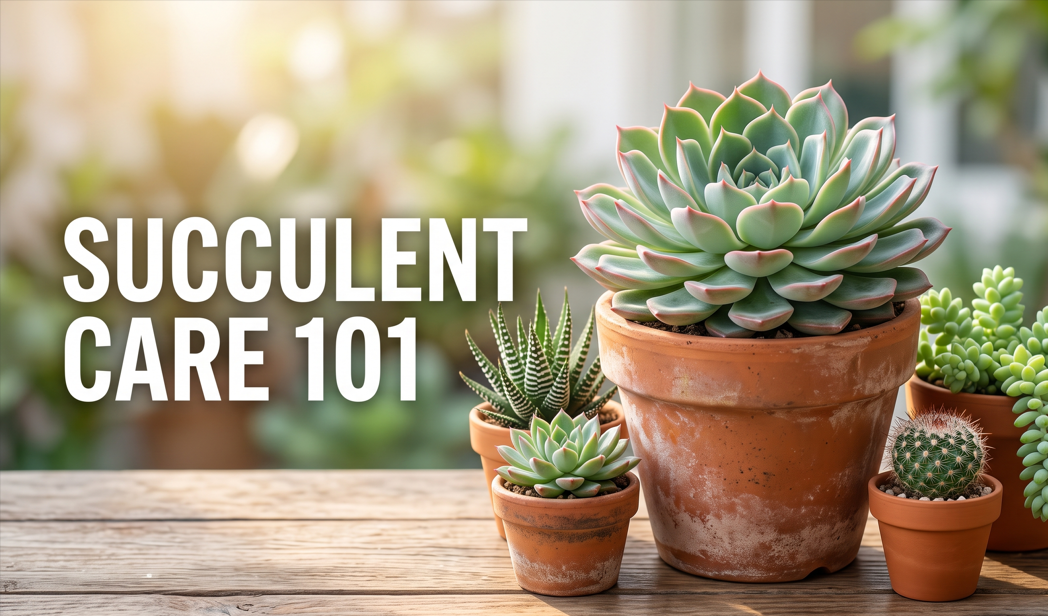
How to Care for Succulents: A Complete Beginner’s Guide
Succulents are popular with beginners for a good reason. They come in an incredible range of shapes, colors, and sizes, and many varieties can thrive with relatively simple care.
But “easy to care for” does not mean that succulents can be completely ignored. Most succulent problems come from a few basic mistakes, especially overwatering, poor drainage, insufficient light, or placing a plant in conditions that do not suit its particular variety.
The good news is that succulent care becomes much easier once you understand what your plant actually needs.
Whether you have just bought your first Echeveria, Haworthia, Sedum, Crassula, or another succulent, this beginner-friendly guide will walk you through the essentials of keeping your plants healthy, compact, and beautiful.
Understanding What Succulents Need
Succulents are plants adapted to environments where water may be limited. Many store moisture in their fleshy leaves, stems, or roots, which allows them to tolerate periods of dryness.
This does not mean that every succulent has exactly the same care requirements. Some prefer several hours of direct sunlight, while others are better suited to bright indirect light. Some grow actively during warmer months, while others have different seasonal growth patterns.
Instead of following a rigid watering calendar, pay attention to your plant, its soil, its container, and the growing conditions around it.
The most important elements of basic succulent care are light, water, soil, drainage, temperature, airflow, and occasional feeding.

How Much Sunlight Do Succulents Need?
Light is one of the most important parts of successful succulent care.
Many popular succulents grow best in bright light and can benefit from several hours of gentle direct sunlight each day. A bright south- or west-facing window can work well indoors, although the intensity of sunlight varies depending on the season and your location.
Morning sunlight is often easier for indoor growers to manage than intense afternoon sun.
If a succulent does not receive enough light, it may begin to stretch toward the light source. This elongated growth is commonly called etiolation. The plant may lose its compact shape and develop larger spaces between its leaves.
On the other hand, suddenly moving a plant from a low-light location into strong direct sunlight can cause sunburn.
The safest approach is to increase light gradually when moving a succulent into brighter conditions.
Watch the leaves carefully. Pale or stretched growth can indicate that the plant needs more light, while bleached, brown, or scorched patches may indicate excessive exposure or a sudden change in light intensity.
How Often Should You Water Succulents?
Watering is probably the area where beginners make the most mistakes.
There is no universal schedule that works for every succulent. Factors such as temperature, humidity, pot size, soil composition, season, airflow, and light exposure can all affect how quickly the soil dries.
Instead of watering simply because a certain number of days have passed, check the soil first.
For many potted succulents, allow the soil to dry thoroughly before watering again. When it is time to water, water deeply enough to moisten the soil throughout and allow excess water to drain freely from the bottom of the container.
Then allow the soil to dry again before watering.
Avoid giving a succulent tiny amounts of water every day. Frequent light watering can keep parts of the root zone continually damp and may create conditions that encourage root problems.
During cooler or less active periods, your succulent may need considerably less water. During hot, bright, and dry conditions, it may use water more quickly.
The plant and its growing environment should determine your watering routine.
Why Overwatering Is So Dangerous
Succulents are much more tolerant of short periods of dryness than many people expect. Their ability to store water is one reason they can survive in relatively dry environments.
The bigger problem is often excess moisture.
When succulent soil stays wet for too long, roots may become stressed and eventually rot. Soft or translucent leaves, yellowing, leaf drop, and a persistently wet pot can all be warning signs that something is wrong.
Overwatering is especially likely when a succulent is planted in dense soil or a container without adequate drainage.
If you notice signs of possible root rot, stop watering and inspect the plant and its growing medium. Severely damaged roots may need to be removed, and the plant may need fresh, fast-draining soil.
Good drainage is one of the simplest ways to reduce the risk of moisture-related problems.

Choose the Right Soil for Succulents
Regular garden soil or heavy potting soil may hold more moisture than many succulents need.
A well-draining succulent or cactus mix is generally a better starting point for container-grown succulents.
The goal is to create a growing medium that allows water to move through the root zone rather than remaining saturated for a long time.
Some experienced growers make their own succulent mixes using materials such as potting soil, perlite, pumice, coarse sand, or other mineral components. The ideal mix can vary depending on the succulent, climate, watering habits, and growing environment.
Whatever mix you use, avoid creating a dense, compacted growing medium that stays wet for extended periods.
Use Pots With Drainage Holes
A drainage hole is one of the most useful features a succulent container can have.
When excess water can escape through the bottom of the pot, it becomes much easier to thoroughly water the plant without leaving the roots sitting in stagnant moisture.
Decorative containers without drainage holes can still be used as outer pots, but placing a nursery pot with drainage inside the decorative container is often a safer approach.
Remember to empty standing water from the outer container after watering.
Terracotta pots can also be useful for succulent growers because their porous sides allow some moisture to evaporate. However, the type of pot is only one part of the equation. Light, soil, watering habits, and airflow also matter.
How to Repot a Succulent
Succulents do not necessarily need to be repotted every year.
Consider repotting when the plant has outgrown its container, the soil has become compacted or degraded, the roots have filled the pot, or the existing growing medium is not draining well.
Choose a new container only slightly larger than the current one. A pot that is dramatically larger can hold more soil and moisture than the plant needs.
To repot, gently remove the succulent from its existing container and inspect the roots. Remove obviously dead or damaged material with clean tools if necessary.
Place fresh, well-draining succulent soil into the new container and position the plant at an appropriate depth.
After repotting, give the plant time to settle and adjust your watering according to the condition of the new soil and the plant.
Do not treat repotting as a reason to immediately saturate a stressed plant.
Fertilizing Succulents
Succulents generally do not require heavy fertilization.
During active growth, some growers use a balanced fertilizer diluted according to the product instructions. A fertilizer specifically formulated for cacti and succulents can also be an option.
Avoid applying excessive fertilizer. More is not necessarily better, and overly strong fertilizer can damage roots.
If your succulent is growing slowly during a dormant or low-growth period, reducing or stopping fertilizer may be appropriate.
Always follow the instructions on the fertilizer you use and consider the specific needs of your plant.
How to Keep Succulents Healthy Indoors
Growing succulents indoors can be successful when you recreate the conditions they need as closely as possible.
Start with light. Place the plant near a bright window and monitor its growth over time.
Good airflow is also helpful. Avoid keeping plants in consistently damp, poorly ventilated corners.
Water based on soil dryness rather than a fixed calendar.
Keep the leaves and growing area clean, and inspect plants regularly for pests such as mealybugs, aphids, or spider mites.
If natural light is not sufficient, a suitable grow light can supplement the available light.
Choosing Succulents for Your Collection
One of the best things about growing succulents is the enormous variety available to collectors.
Beginners often start with familiar types such as Echeveria, Haworthia, Crassula, Sedum, Aloe, or various cactus species. As your experience grows, you may become interested in unusual forms, rare cultivars, and distinctive varieties.
For example, the colorful and unusual Opuntia Joseph’s Coat cactus has attracted attention among plant enthusiasts because of its distinctive appearance and changing coloration.
If you enjoy discovering unusual plants, you can read more about the trend surrounding this eye-catching variety in our guide to the Opuntia Joseph’s Coat cactus.
The important thing is to learn the basic care requirements of each plant rather than assuming that every succulent should be treated exactly the same way.

Common Succulent Problems
Even easy-care plants can develop problems.
Overwatering is one of the most common issues. If the soil stays wet for too long, roots can become damaged and rot may develop.
Insufficient light is another common problem. A succulent that receives too little light may become stretched, lose its compact form, or show weaker growth.
Sunburn can occur when a plant that has been growing in lower light is suddenly exposed to intense direct sunlight.
Pests can also appear. Check regularly for small insects, cotton-like clusters, webbing, damaged leaves, or unusual sticky residue.
Catching problems early makes them much easier to manage.
Signs Your Succulent May Need Attention
Your succulent cannot tell you exactly what is wrong, but its appearance can provide useful clues.
Wrinkled or slightly shriveled leaves may indicate that the plant needs water, although other factors can also cause changes in leaf appearance.
Soft, mushy, or translucent leaves may be associated with excessive moisture.
Long, stretched growth can indicate insufficient light.
Brown or bleached patches may be caused by sunburn or other environmental stress.
Sudden leaf drop can have several causes, including watering problems, temperature stress, pests, or natural aging of older leaves.
Instead of changing several things at once, look at the plant's recent conditions and make gradual adjustments.
Seasonal Succulent Care
Succulent care often changes throughout the year.
During spring and summer, many varieties enter an active growth period and may use water more quickly, especially in warm, bright conditions.
As temperatures fall and daylight decreases, growth may slow down. Some plants then require less frequent watering.
Winter care is particularly important for indoor plants because cooler temperatures and lower light can make soil stay wet for longer.
Rather than following a strict seasonal watering schedule, check the soil and consider your plant's actual growing conditions.
A Simple Succulent Care Routine for Beginners
You do not need to spend hours caring for your succulents.
Once or twice a week, take a few minutes to inspect your plants.
Check the soil moisture.
Look at the leaves for unusual changes.
Make sure the plant is receiving appropriate light.
Inspect for pests.
Check that the pot and drainage system are working properly.
This simple routine can help you notice problems before they become serious.

Final Thoughts
Learning how to care for succulents is mostly about understanding balance.
Give your plants enough light without exposing them suddenly to harsh conditions. Water thoroughly when the soil has dried rather than watering on an automatic schedule. Use a well-draining growing medium and containers that allow excess water to escape.
Most importantly, remember that succulents are living plants, and their needs can change with the season, environment, and variety.
Once you learn to observe your plants instead of relying only on a fixed care schedule, succulent growing becomes much easier.
Start with a few forgiving varieties, learn how they respond to your environment, and gradually expand your collection as your confidence grows.