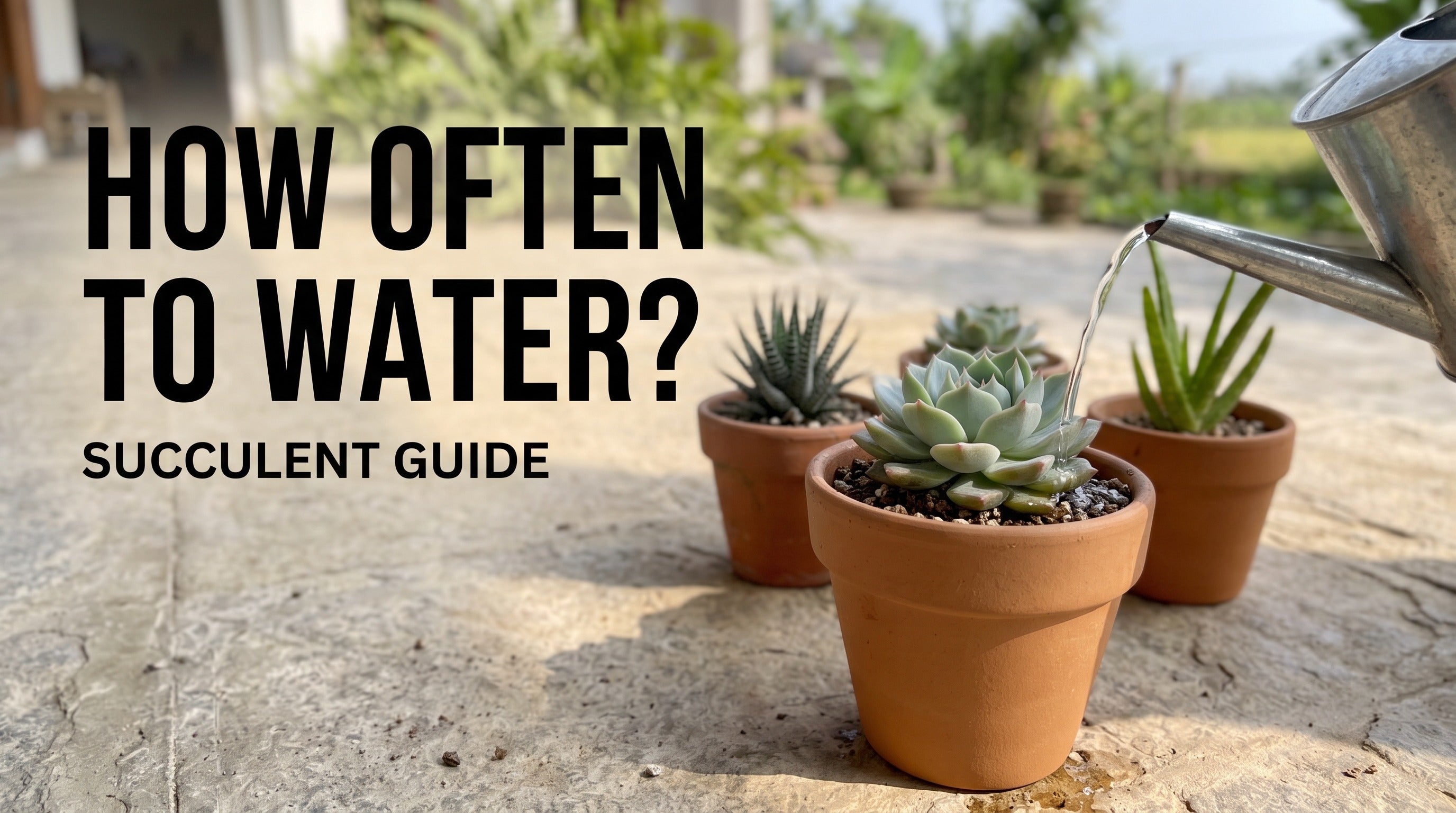
How Often Should You Water Succulents? A Simple Guide
One of the most common questions new succulent growers ask is simple: How often should you water succulents?
The answer is not quite as simple as watering once a week or once every two weeks.
Succulents store water in their leaves, stems, or roots, which allows many species to tolerate periods of dry conditions. Because of this, they generally prefer a cycle of thorough watering followed by an appropriate period of drying rather than frequent small amounts of water.
The right watering frequency depends on several factors, including the type of succulent, pot size, soil, drainage, light, temperature, humidity, and whether the plant is growing indoors or outdoors.
Instead of following a rigid calendar, it is better to learn how to read your succulent and its growing environment.
This simple guide will help you understand when to water succulents, how much water to use, and how to avoid the most common watering problems.
How Often Should You Water Succulents?
For many potted succulents, watering when the soil has dried appropriately is a better approach than following a fixed weekly schedule.
Depending on your growing conditions, this might mean watering every 1 to 3 weeks during active growth.
Some plants and environments may need water more frequently, while others may go much longer between waterings.
For example, a small succulent growing outdoors in hot, bright conditions may dry much faster than the same plant sitting indoors in a cool room with limited light.
The most important question is not "What day should I water?"
Instead, ask:
"Has the soil dried enough, and does the plant need water?"
This simple change in thinking can make succulent care much easier.
Why Succulents Do Not Need Frequent Watering
Many succulents come from environments where rainfall can be irregular.
Their fleshy leaves and stems allow them to store water, helping them survive periods of dryness.
This does not mean succulents should never be watered.
They still need water for normal growth.
The difference is that many succulents are better adapted to receiving a thorough watering followed by a period of drying than to staying constantly moist.
Frequent watering when the soil is still wet can reduce the amount of air around the roots and create an environment where root problems become more likely.
That is why the condition of the soil matters so much.
How to Know When a Succulent Needs Water
One of the easiest ways to decide when to water is to check the soil and observe the plant.
Start by checking whether the growing medium is dry.
You can gently insert a finger into the soil for smaller containers or use a simple moisture check appropriate for the pot.
For larger containers, check deeper into the soil rather than only looking at the surface.
The surface can appear dry while the lower part of the container is still moist.
You can also lift the pot if it is small enough.
A container that feels noticeably lighter than it did after watering may indicate that much of the moisture has been used.
Over time, you will become familiar with how your specific pots feel when they are dry.

Signs That Your Succulent May Need Water
Succulents can show several signs when they are becoming dehydrated.
Possible signs include:
- Leaves becoming slightly softer
- Leaves appearing thinner or less plump
- Wrinkled leaves
- Lower leaves becoming dry and shriveled
- Soil remaining dry for an extended period
- The plant looking less full than usual
However, not every wrinkled leaf means your succulent needs water immediately.
Older leaves naturally age and dry out.
Environmental stress can also affect leaf appearance.
Use several clues together rather than relying on one symptom.
How Much Water Do Succulents Need?
When it is time to water, giving the plant a thorough watering is often more useful than adding just a few drops.
For a potted succulent with drainage holes, slowly apply water until some excess begins to drain from the bottom.
This helps moisten the root zone more evenly.
Allow excess water to drain away completely.
Do not leave the pot sitting in a saucer full of water for extended periods.
After watering, allow the soil to dry appropriately before watering again.
This creates a natural cycle:
Water thoroughly → allow excess water to drain → let the soil dry → water again.
This is generally more useful than watering a small amount every few days.

The Importance of Well-Draining Soil
Watering frequency cannot be separated from soil.
A succulent planted in dense, moisture-retentive soil may stay wet for a long time.
A succulent planted in a porous, well-draining mix may dry much faster.
This is why there is no universal watering schedule that works for every succulent.
Before adjusting your watering routine, make sure the growing medium is appropriate for the plant and container.
For more information about choosing the right growing medium, read our guide to The Best Soil for Succulents: What You Need to Know.
A suitable soil mix can make it much easier to manage moisture and avoid keeping succulent roots wet for too long.
Why Drainage Holes Matter
A drainage hole gives excess water somewhere to escape.
This is especially important for succulents because watering too frequently or allowing water to collect around the roots can create problems.
When possible, grow potted succulents in containers with drainage holes.
If you prefer decorative pots without drainage holes, you can keep the succulent in a smaller nursery pot with drainage holes and place it inside the decorative container.
After watering, check the outer container and remove any standing water when necessary.
Do not assume that a layer of rocks at the bottom of a pot automatically creates good drainage.
The entire growing environment matters, including the soil, container, drainage opening, and watering method.
Watering Succulents Indoors
Indoor succulents often dry more slowly than outdoor plants.
Indoor temperature, humidity, airflow, window exposure, and pot size can all affect drying time.
A succulent near a bright, sunny window may use water faster than one several feet away from the window.
During cooler or darker periods, the soil may remain moist longer.
This means an indoor succulent might need watering every couple of weeks in one environment and much less frequently in another.
Check the soil rather than following a fixed calendar.
If the plant is indoors and the soil is still moist, wait.
If the soil has dried appropriately and the plant shows signs that it needs water, it may be time to water.
Watering Succulents Outdoors
Outdoor succulents can dry more quickly because of sunlight, wind, temperature, and airflow.
During hot weather, containers may lose moisture rapidly.
However, outdoor plants can also receive natural rainfall.
Always consider recent weather before watering.
If heavy rain has already thoroughly watered your succulent, adding more water may be unnecessary.
Container size also matters.
A small pot can dry much faster than a large container.
Outdoor succulents may therefore need more frequent monitoring during hot and dry weather.

How Often Should You Water Succulents in Summer?
Summer watering depends on the plant and your environment.
If your succulent is actively growing and the soil dries quickly, it may need water more frequently than during cooler periods.
A small outdoor pot exposed to strong sunlight can dry rapidly.
However, do not water simply because it is summer.
Check the soil first.
If the soil is still moist, give it more time.
If it has dried appropriately, water thoroughly and allow excess moisture to drain.
How Often Should You Water Succulents in Winter?
Many succulents require less frequent watering during cooler or darker periods.
Some species enter a period of slower growth or dormancy, while others may continue growing depending on their environment.
Indoor heating can also change humidity and drying rates.
Rather than stopping watering completely or following a winter calendar, monitor the plant and soil.
If the soil remains dry for an extended period and the plant needs moisture, water appropriately.
The key is to avoid keeping the roots constantly wet during periods of slower growth.
Signs of Overwatered Succulents
Overwatering is one of the most common problems among beginner succulent growers.
Possible signs include:
- Leaves becoming unusually soft
- Leaves turning yellow or translucent
- Mushy stems or leaves
- Soil staying wet for too long
- Unpleasant odor from the soil
- Sudden leaf drop
- Dark or damaged roots
These symptoms can have different causes, so do not assume that every yellow leaf means overwatering.
Start by checking the soil moisture, drainage, light, and recent watering history.
If the soil remains wet for a long time, the combination of watering frequency and growing conditions may need to be adjusted.
Signs of an Underwatered Succulent
Underwatering can also cause visible changes.
Common signs may include:
- Wrinkled leaves
- Soft or limp leaves
- Shriveling
- Dry lower leaves
- Very dry soil
- Slow or stalled growth
Again, context matters.
A succulent can naturally lose older lower leaves as it grows.
Look at the overall plant rather than diagnosing the problem from one leaf.
If the plant is consistently losing moisture faster than expected, examine the pot size, soil, light, temperature, and watering routine.
Should You Mist Succulents?
Misting is generally not a substitute for properly watering the root zone.
Succulents absorb water primarily through their roots, so spraying a small amount of water onto the leaves does not replace a thorough watering when the plant actually needs moisture.
Frequent misting can also leave moisture on leaves and around the plant without properly hydrating the root system.
For most potted succulents, focus on watering the soil thoroughly when the plant needs it.
Best Time of Day to Water Succulents
There is no single universal hour that every succulent must be watered.
However, watering earlier in the day can be convenient because it gives excess moisture more time to evaporate from surfaces and allows the plant to go through its normal daily cycle.
The more important factor is using an appropriate watering method and avoiding waterlogged soil.
If possible, avoid leaving water sitting in the center of rosette-forming succulents for long periods.
Water the growing medium rather than intentionally filling the plant's crown.
Should You Water Succulents After Repotting?
Watering after repotting depends on the condition of the plant, the roots, and the repotting process.
If roots were disturbed or damaged during repotting, some growers prefer to give the plant time to settle before watering.
The appropriate approach can vary depending on the succulent and growing conditions.
After repotting, avoid automatically following your old watering schedule.
Check the soil, observe the plant, and consider whether the roots need time to recover.
A fresh pot of dry, well-draining soil should not be treated the same way as an established plant that has been growing for months.
Watering Newly Planted Succulents
Newly planted succulents may need some time to adjust.
If you are planting a succulent with healthy, undisturbed roots into an appropriate growing medium, its watering needs will depend on the plant and environment.
If roots have been damaged, the plant may require a different approach while it recovers.
Avoid keeping newly planted succulents constantly wet simply because they are new.
Good drainage and observation are more important than following a fixed schedule.
How Pot Size Affects Watering Frequency
Pot size can have a surprisingly large effect on watering.
Small containers hold less soil and can dry quickly.
Large containers hold more growing medium and may stay moist for longer.
A small succulent in a large pot may therefore be at greater risk of staying wet than the same plant in a properly sized container.
Choose a container that suits the plant and provides adequate drainage.
Do not automatically move a small succulent into a very large pot.
How Light Affects Succulent Watering
Light affects how quickly plants use water.
A succulent receiving plenty of bright light may dry faster than one growing in a dim environment.
However, increasing watering simply because a plant receives more light is not always the right solution.
Instead, monitor the soil.
If the plant receives insufficient light, keeping the soil wet can create an unfavorable combination.
Good succulent care requires a balance between light, water, soil, and airflow.
A Simple Succulent Watering Routine
If you are new to succulent care, use this simple routine:
Step 1: Check the soil.
Make sure the growing medium has dried appropriately.
Step 2: Observe the plant.
Look for changes such as wrinkling, shriveling, or loss of firmness.
Step 3: Check the pot.
Make sure the container has adequate drainage.
Step 4: Water thoroughly.
Apply water to the soil until excess begins draining from the bottom.
Step 5: Drain completely.
Do not leave the pot sitting in standing water.
Step 6: Wait.
Allow the soil to dry appropriately before checking again.
This approach is much more reliable than setting a reminder to water every seven days.

Common Succulent Watering Mistakes
One of the biggest mistakes is watering on a fixed schedule without checking the soil.
Another is giving tiny amounts of water frequently.
This can repeatedly moisten the surface without thoroughly watering the root zone.
Using a container without drainage is another common problem.
Beginners may also water more often during winter simply because the plant looks different or the leaves appear slightly less plump.
Instead, look at the entire growing environment.
If you want to learn more about choosing the right moisture-retaining balance for your plant, our guide to The Best Soil for Succulents: What You Need to Know explains how soil texture, drainage, and growing conditions influence watering.
Final Thoughts
So, how often should you water succulents?
There is no single number that works for every plant.
For many potted succulents, the best approach is to water thoroughly when the soil has dried appropriately and then allow excess water to drain away.
Your watering frequency will depend on the plant, pot, soil, light, temperature, humidity, and season.
Instead of following a strict calendar, learn to observe your succulent.
Check the soil.
Look at the plant.
Consider the environment.
Then water when the plant actually needs it.
Once you understand this simple cycle, succulent watering becomes much less confusing.
The goal is not to water as little as possible.
The goal is to provide the right amount of moisture at the right time while allowing the roots access to air between waterings.