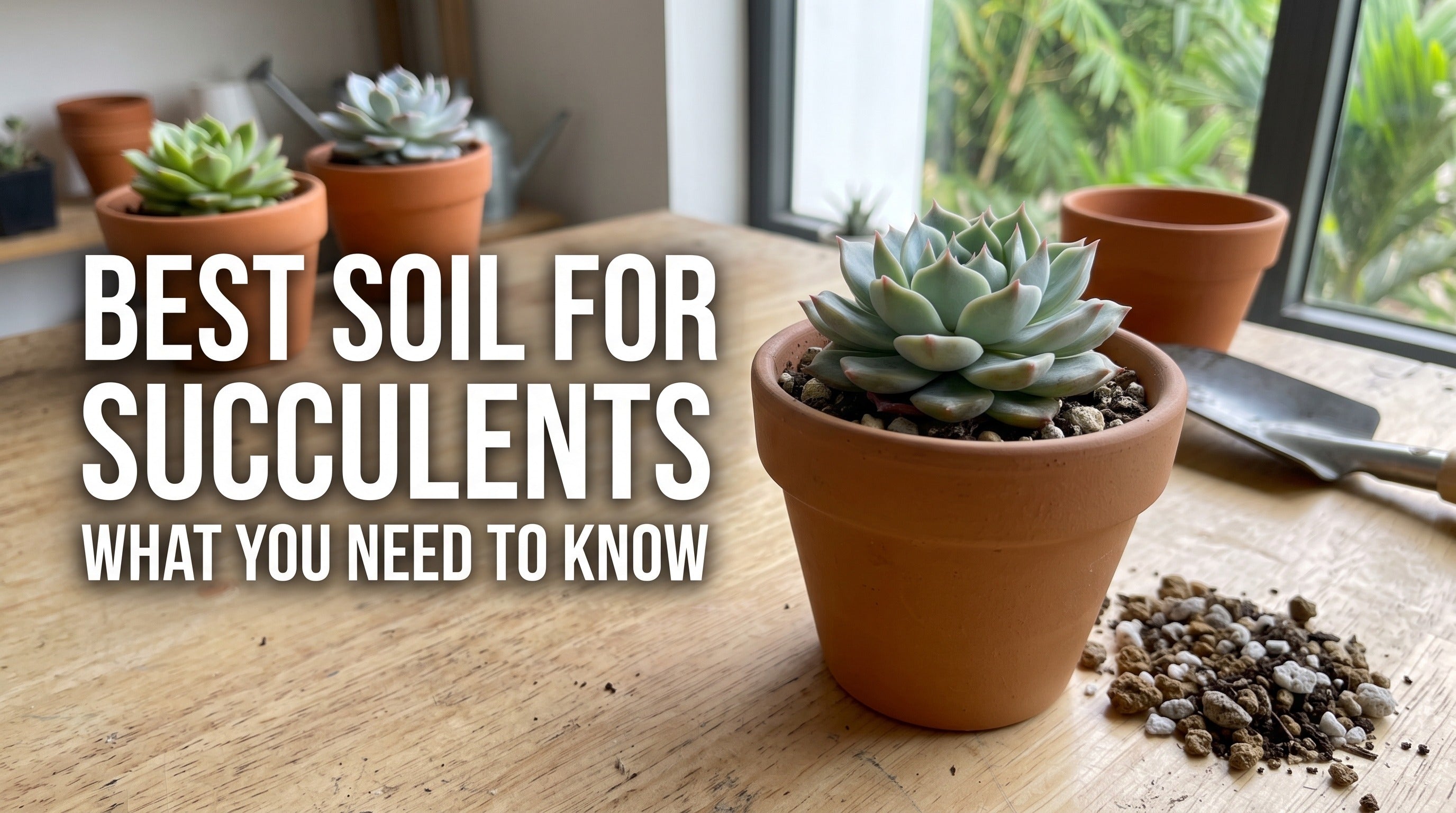
The Best Soil for Succulents: What You Need to Know
Choosing the right soil is one of the most important steps when growing succulents.
Succulents are adapted to environments where water does not remain around their roots for long periods. Because of this, the soil used for succulents should allow excess water to move away quickly while still providing enough support and moisture for healthy root growth.
A common mistake is assuming that regular garden soil or standard potting soil will work for every succulent.
In many containers, these soils can hold more moisture than succulents need.
The good news is that choosing the best soil for succulents does not have to be complicated.
Once you understand drainage, texture, organic matter, and the basic needs of succulent roots, you can choose a suitable commercial mix or create your own.
Why Do Succulents Need Well-Draining Soil?
The roots of succulents need access to both moisture and air.
When soil stays wet for too long, the spaces between soil particles can remain filled with water instead of air.
This can create an unfavorable environment for succulent roots.
Well-draining soil helps excess water move through the container instead of remaining around the roots.
This does not mean succulent soil should contain no organic material or dry out immediately.
The goal is balance.
You want a growing medium that holds enough moisture for the plant to use while allowing excess water to drain away efficiently.
What Is the Best Soil for Succulents?
For most potted succulents, a good soil mix should be:
- Fast draining
- Well aerated
- Porous
- Loose rather than compacted
- Suitable for the type of container being used
- Appropriate for the specific succulent species
A practical succulent soil mix often combines an organic component with mineral or gritty materials.
The organic component can help retain some moisture and provide a growing medium for roots.
Mineral materials such as perlite, pumice, coarse sand, or similar materials can increase porosity and improve drainage.
The ideal balance can vary depending on your climate, watering habits, container size, and succulent species.

Understanding the Main Components of Succulent Soil
You do not need a complicated list of ingredients to create a useful succulent mix.
Instead, it helps to understand what each component contributes.
Organic Potting Soil
Potting soil provides organic material and helps retain some moisture.
It can be useful as part of a succulent mix, but using a dense, moisture-retentive potting soil by itself may not be ideal for many succulents grown in containers.
Choose a relatively light potting soil rather than a heavy garden soil.
Perlite
Perlite is a lightweight volcanic material commonly used to improve aeration and drainage.
Its small, irregular pieces create additional air spaces within the growing medium.
Perlite is particularly useful when you want to make a standard potting mix lighter and more porous.
Pumice
Pumice is another popular mineral component for succulent soil.
It is porous and relatively durable, making it useful for increasing aeration and drainage.
Because pumice does not break down as quickly as some organic materials, it can help maintain the structure of a soil mix over time.
Coarse Sand
Coarse sand can increase the mineral content of a growing mix and improve its texture.
However, not all sand is suitable.
Very fine sand can pack together and reduce drainage rather than improving it.
If you use sand, choose a coarse material designed for horticultural use rather than fine play sand or similar products.
Bark or Other Organic Materials
Some succulent mixes include small amounts of bark or other organic materials.
These ingredients can contribute structure while allowing the mix to retain some moisture.
The exact amount depends on the type of succulent and the growing environment.
Should You Use Regular Potting Soil for Succulents?
Regular potting soil can sometimes be used as one component of a succulent mix.
The problem comes when it is used alone in a container where drainage is limited.
Many standard potting soils are designed to retain moisture for a wide variety of houseplants.
Succulents generally benefit from a more porous growing medium.
Instead of automatically replacing potting soil with a completely mineral mix, consider modifying it with suitable drainage materials.
This gives you more control over the final texture.
A Simple DIY Succulent Soil Mix
One simple starting point for many container-grown succulents is a mix that combines:
- 2 parts potting soil
- 1 part perlite
- 1 part coarse mineral material such as pumice or coarse sand
Mix the ingredients thoroughly before planting.
This is a starting formula rather than a universal rule.
You may need to adjust the ratio depending on your climate, the type of succulent, the container, and how quickly the mix dries.
For a humid environment, you may prefer a more mineral-heavy mix.
For a very dry environment, a slightly higher organic component may sometimes be appropriate.
The important thing is to observe how quickly the soil dries and how your plants respond.

Commercial Succulent Soil vs. DIY Mix
Both options can work well.
Commercial succulent and cactus mixes are convenient and can be a good choice for beginners.
They eliminate the need to purchase several separate ingredients and mix them yourself.
DIY soil mixes give you more control.
If a commercial mix seems too dense, you can add perlite, pumice, or another appropriate mineral component.
This can be useful when you are growing many succulents or want to fine-tune the soil for your local growing conditions.
When choosing a commercial succulent soil, look beyond the product name.
Check the texture and ingredients.
A product labeled for cactus and succulents is not automatically ideal for every growing situation.
The Best Soil for Indoor Succulents
Indoor succulents often have different drying conditions from outdoor plants.
Indoor air movement, humidity, temperature, light levels, and watering habits can all affect how quickly soil dries.
Because indoor containers may dry more slowly, a porous, well-draining succulent mix can be particularly useful.
Place indoor succulents near an appropriate source of bright light and use containers with drainage holes whenever possible.
Avoid placing a drainage-hole container inside a decorative cachepot where excess water can collect unnoticed.
The Best Soil for Outdoor Succulents
Outdoor succulents can experience very different conditions depending on the climate.
Warm, dry environments may allow soil to dry quickly.
Humid or rainy environments may require even more attention to drainage.
For outdoor container succulents, a fast-draining mix combined with a container that has drainage holes can help excess water escape.
If you are planting succulents directly into the ground, the native soil may need to be amended if it is heavy and poorly draining.
Do not assume that simply adding a thin layer of gravel underneath the soil will solve poor drainage.
Improving the overall soil structure is generally more useful than creating a separate gravel layer beneath the planting area.
How to Test Your Succulent Soil
You do not need specialized equipment to evaluate a basic succulent soil mix.
One simple approach is to observe how water moves through the container.
After watering, excess water should be able to drain from the bottom of the pot.
The soil should not remain saturated for an extended period under normal conditions.
You can also feel the texture of the mix.
A good succulent mix should feel relatively loose and crumbly rather than dense and muddy.
If the soil becomes compacted or remains wet for too long, consider whether the mix contains too much fine organic material.
Remember that drying time depends on more than soil.
Container size, drainage holes, light, temperature, airflow, humidity, and watering volume all influence how quickly the soil dries.
Why Drainage Holes Matter
Even the best succulent soil cannot compensate for a container that does not allow excess water to escape.
For most potted succulents, containers with drainage holes are a simple and effective choice.
When you water, excess moisture should have somewhere to go.
If a pot has no drainage hole, water can collect at the bottom of the container and keep the root zone wet for longer than expected.
Decorative pots can still be used.
Simply place the succulent in a suitable nursery pot with drainage holes and use the decorative container as an outer pot.
Always empty standing water after watering when necessary.
How Often Should You Water Succulents in Well-Draining Soil?
There is no single watering schedule that works for every succulent.
Instead of watering according to a fixed calendar, check the condition of the soil and consider the plant's environment.
Allow the growing medium to dry appropriately between waterings.
Then water thoroughly so that the entire root zone receives moisture and excess water can drain away.
The frequency may change throughout the year.
A succulent growing in bright light during a warm period may dry much faster than one growing indoors during a cooler, darker period.
Good soil makes proper watering easier, but it does not replace observation.
Signs Your Succulent Soil May Be Too Moist
If soil remains wet for a long time after watering, the mix may be holding more moisture than your plant and environment require.
Other warning signs can include:
- Soil that feels constantly wet
- Persistent unpleasant soil odor
- Water draining very slowly
- A dense or muddy texture
- Repeated root problems
- Leaves becoming soft or discolored
These symptoms can have multiple causes, so avoid diagnosing the problem from a single sign.
Start by checking the soil, container drainage, light, watering habits, and environmental conditions.
Signs Your Succulent Soil May Be Too Dry
Fast-draining soil is useful, but a mix that dries extremely quickly may not always be appropriate.
If water immediately runs through the container and the root zone does not seem to absorb enough moisture, the mix may be excessively coarse or hydrophobic.
Very small containers can also dry quickly.
Watch the plant and soil rather than following a rigid watering schedule.
If necessary, adjust the soil mix or watering method gradually.
How to Repot a Succulent Into Better Soil
Repotting is a good opportunity to evaluate the condition of the existing soil.
Choose a container with a drainage hole and prepare your new succulent mix before removing the plant.
Gently remove the succulent from its existing container.
Brush away loose old soil from the roots without aggressively damaging them.
Check the roots and remove obviously dead or damaged material with clean tools when appropriate.
Place a small amount of fresh soil into the new container.
Position the succulent so that the plant sits at an appropriate depth.
Fill around the roots with the new mix without compacting it excessively.
After repotting, follow care practices appropriate for the plant and the condition of its roots.
Avoid treating repotting as a reason to immediately increase watering.
Give the plant time to settle into its new environment.

Common Succulent Soil Mistakes
Using soil that stays wet for too long is one of the most common problems.
Another mistake is choosing a very fine material because it seems like it should improve drainage.
In reality, some fine materials can compact and reduce the air spaces around roots.
Planting a succulent in a container without a drainage hole can also create problems.
Another common mistake is assuming that every succulent needs exactly the same soil mixture.
Different succulents can have different preferences.
Your growing environment matters too.
If you are also working on general succulent care, our guide to 10 Common Succulent Mistakes and How to Avoid Them covers other problems beginners often encounter, including watering and placement mistakes.
How to Choose Soil Based on Your Growing Environment
Your environment should influence your soil choice.
For a warm and dry growing area, a mix that retains a moderate amount of moisture may be practical.
For humid conditions or areas with frequent rainfall, a more mineral-heavy and fast-draining mix may be helpful.
Indoor growers should consider airflow and light.
A succulent sitting in a dim corner may use water much more slowly than the same plant growing near a bright window.
Instead of searching for one perfect soil recipe, think of your soil as part of the entire growing system.
Plant + pot + light + temperature + humidity + watering + soil
All of these factors work together.
Best Soil for Different Types of Succulents
Most commonly grown container succulents can benefit from a porous, well-draining mix, but the exact composition can vary.
Echeveria and many rosette-forming succulents generally appreciate soil that dries appropriately between waterings.
Haworthia and Gasteria can also benefit from a porous mix, although their light and watering preferences differ from some sun-loving succulents.
Aloe and many other drought-adapted plants generally do well in containers with good drainage and an appropriate fast-draining medium.
Cacti typically benefit from a very porous growing medium, although the ideal mix can vary by species.
When possible, research the specific plant rather than assuming one recipe is perfect for every succulent.
Final Thoughts
The best soil for succulents is not simply the driest soil you can find.
It is a growing medium that provides the right balance of drainage, aeration, support, and moisture retention for your plant and growing environment.
For many beginners, a quality succulent or cactus potting mix is a convenient starting point.
If the mix seems too dense, you can often improve its structure by incorporating appropriate mineral materials such as perlite or pumice.
The most important lesson is to pay attention to how the soil behaves.
Does water drain efficiently?
Does the mix stay wet for too long?
Does it become compacted?
Does your succulent produce healthy new growth?
Once you learn to observe these signals, choosing and adjusting succulent soil becomes much easier.
Good soil, proper drainage, suitable light, and thoughtful watering can give your succulents a much better foundation for healthy growth.