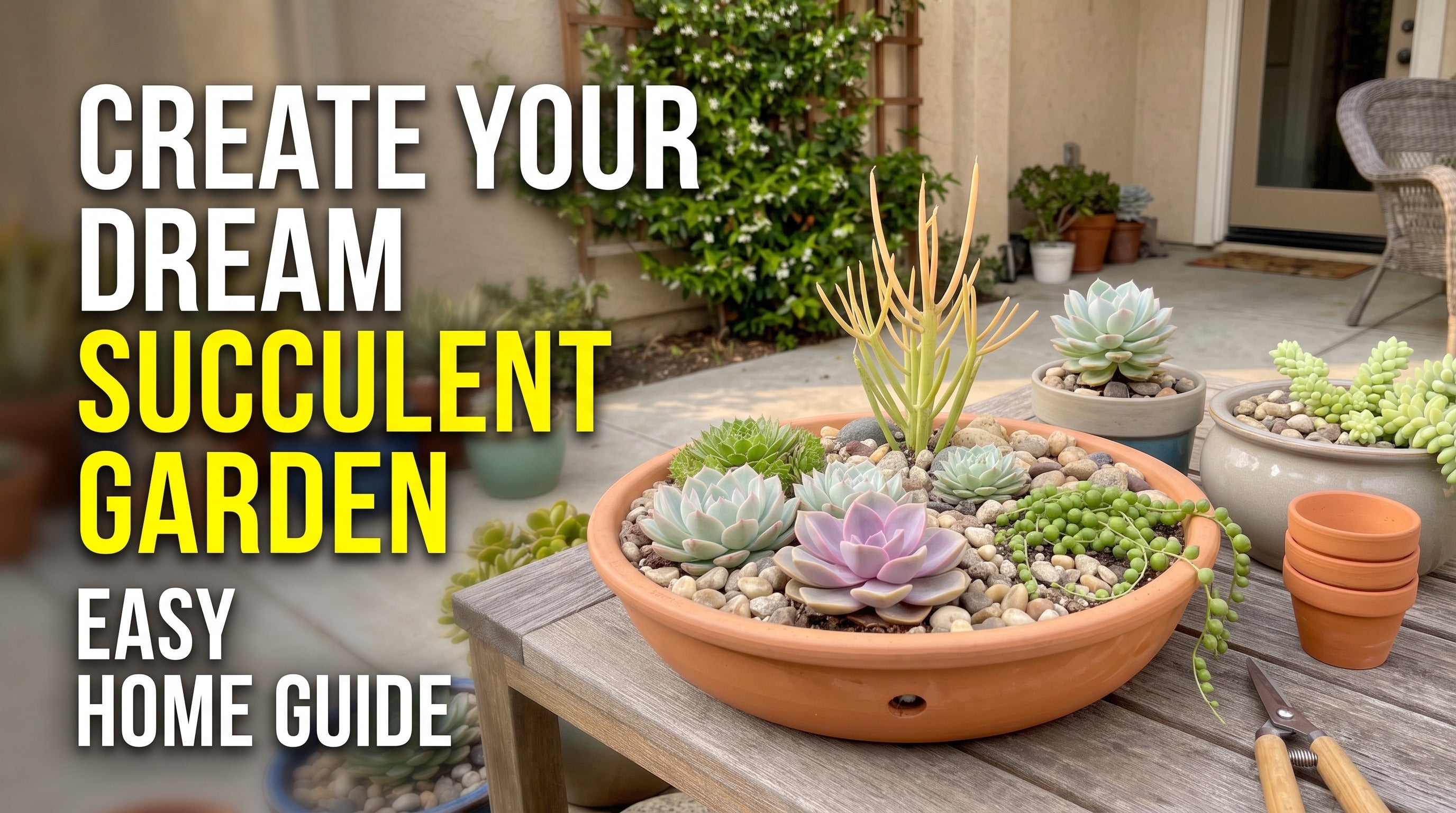
How to Create a Beautiful Succulent Garden at Home
Succulents are one of the easiest ways to bring texture, color, and personality into a home garden.
Their unusual shapes, fleshy leaves, and wide variety of colors make them especially fun to arrange in containers, small garden beds, patios, balconies, and sunny indoor spaces.
The best part is that you do not need a huge garden to create something beautiful.
A shallow container, a few carefully selected succulents, well-draining soil, and the right location can be enough to create a miniature garden that looks intentional and attractive.
However, creating a beautiful succulent garden is about more than simply putting several plants next to each other.
The plants need compatible growing conditions, enough space, appropriate light, and excellent drainage.
In this guide, you will learn how to create a succulent garden at home from start to finish, including choosing a location, selecting plants, choosing a container, preparing soil, arranging your plants, and maintaining the garden as it grows.
Why Create a Succulent Garden?
A succulent garden can be a simple and rewarding gardening project for beginners.
Succulents come in many shapes and sizes, from compact rosettes to trailing varieties and upright plants.
This gives you plenty of options for creating visual contrast.
You can combine:
- Tall and short plants
- Rosette-shaped and upright succulents
- Green, blue, purple, and pink tones
- Smooth and textured leaves
- Upright and trailing growth
- Large focal plants with smaller surrounding plants
Succulents can also work well in relatively small spaces.
A container garden can sit on a patio, balcony, porch, windowsill, or outdoor table.
If you choose plants that have similar care requirements, the garden can remain relatively easy to maintain.

Choose the Right Location
Before buying plants or a container, decide where your succulent garden will live.
This is one of the most important decisions you can make.
Succulents generally need plenty of bright light, although the exact amount varies between species.
Outdoor gardens may receive strong sunlight, while indoor gardens may receive much less usable light.
Observe the location throughout the day.
Ask yourself:
- How much bright light does the area receive?
- Does it receive direct sunlight?
- Is the area shaded for most of the day?
- Does the light change significantly between summer and winter?
- Is the location protected from heavy rain?
- Does water collect around the garden after storms?
If you are creating an outdoor succulent garden, choose a location with excellent drainage.
If you are growing succulents indoors, place them near an appropriately bright window or use supplemental grow lighting when necessary.
Insufficient light can cause many succulents to become elongated and lose their compact shape.
Choose a Garden Style
Before arranging your plants, think about the overall look you want.
There is no single correct way to design a succulent garden.
You can create a simple minimalist arrangement or a colorful collection filled with different shapes and textures.
Here are a few styles to consider.
Minimalist Succulent Garden
Choose a small number of plants with similar colors and simple shapes.
A neutral ceramic or concrete container can create a clean, modern appearance.
Desert-Inspired Garden
Combine succulents with rocks, gravel, and earthy-colored containers.
Use different plant heights to create a miniature desert landscape.
Colorful Succulent Garden
Choose plants with contrasting colors and forms.
Green, blue-green, purple, pink, and reddish tones can create visual interest.
Fairy Garden Style
Add small decorative stones, miniature ornaments, or other garden accents.
Keep decorations simple so they do not overpower the plants.
Modern Container Garden
Use one large geometric container and arrange plants according to height and shape.
This works particularly well on patios, balconies, and modern outdoor spaces.
Choose the Right Succulents
When creating a succulent garden, avoid choosing plants based only on appearance.
The plants also need compatible growing conditions.
Some succulents prefer brighter light, while others tolerate partial shade better.
Some stay compact, while others eventually become large or trailing.
Think about the mature size of every plant before placing it in your garden.
Good options for beginner-friendly succulent arrangements can include:
- Echeveria
- Sedum
- Graptopetalum
- Haworthia
- Crassula
- Aloe
- Kalanchoe
- Sempervivum
- String of Pearls
- Gasteria
Not every variety will have identical care requirements, so always check the specific needs of the plants you choose.
The goal is to group plants that can live comfortably in the same environment.
Think About Shape and Height
One of the easiest ways to make a succulent garden look more attractive is to vary plant height.
If every plant is the same height, the arrangement can look flat.
Instead, consider using:
- One taller plant as a focal point
- Medium-sized rosette succulents around it
- Low-growing plants near the edges
- Trailing varieties near the front
This creates layers.
A simple arrangement might have one taller succulent in the back, several medium plants in the middle, and low or trailing varieties around the front.
The result can look much more natural than placing every plant at the same level.
Create a Focal Point
A focal point gives the garden somewhere for the eye to land.
This does not have to be the largest plant.
It could be:
- A large rosette
- A tall architectural succulent
- A uniquely colored plant
- A decorative rock
- An unusual container
Choose one main feature and let the surrounding plants support it.
Too many focal points can make the arrangement feel crowded.
Use Texture to Add Interest
Color is only one part of a beautiful succulent garden.
Texture can make an even bigger difference.
Compare the appearance of:
- Smooth Echeveria leaves
- Rounded Crassula leaves
- Fine trailing stems
- Spiky Aloe leaves
- Tall upright forms
- Small clustered rosettes
Combining different textures creates visual depth.
Try not to place five plants with nearly identical shapes next to one another.
Instead, look for contrast.
Choose a Container With Drainage
If you are creating a container succulent garden, drainage should be a priority.
Choose a container with drainage holes whenever possible.
Succulents generally do not tolerate constantly wet soil, and containers without adequate drainage can make it much harder to manage moisture.
Terracotta is a popular option because the material is porous and can help soil dry more quickly.
Ceramic and other containers can also work well as long as drainage is properly managed.
If you have a decorative container without a drainage hole, consider using it as an outer container with a smaller nursery pot inside rather than planting directly into a container that cannot drain.
Good drainage is one of the foundations of healthy succulent growth.
Choose the Right Soil
Succulents generally perform best in a growing medium that drains quickly.
Heavy soil that stays wet for long periods can create problems for succulent roots.
A commercial cactus and succulent mix is an easy option for beginners.
You can also improve drainage by adding appropriate mineral components such as perlite, pumice, or coarse sand, depending on the plants and growing conditions.
The exact recipe does not need to be complicated.
The important thing is that water should move through the growing medium rather than remaining trapped around the roots.
A well-draining soil mix is especially important in containers.
Prepare the Container
Once you have chosen your container, clean it before planting.
Make sure the drainage holes are open.
Add your succulent growing mix, leaving enough room near the top for planting and watering.
Do not pack the soil excessively.
You want the roots to have access to air as well as moisture.
If you are using decorative gravel or rocks, save them for the final stage rather than creating a thick drainage layer underneath the soil.
A drainage hole and appropriate growing medium are more important than simply adding rocks to the bottom of a container.
Arrange the Plants Before Planting
This is one of the easiest ways to improve your final design.
Do not immediately plant each succulent as soon as you take it out of its nursery pot.
Instead, place the plants on top of the soil first.
Move them around until you like the arrangement.
Try different combinations of:
- Height
- Color
- Shape
- Texture
- Spacing
Take a photo of your favorite arrangement before planting.
This gives you a reference if the plants need to be moved while you work.

Avoid Overcrowding
It can be tempting to fill every empty space.
A crowded container may look impressive on planting day, but succulents grow.
Plants that appear perfectly spaced today may become overcrowded later.
Leave enough room for each succulent to develop.
Good spacing also allows better airflow around the plants.
Think about how large each plant is likely to become rather than only looking at its current size.
Plant the Succulents
Once you are happy with the layout, begin planting.
Remove each succulent carefully from its nursery container.
Handle the root ball gently.
Create a small opening in the soil and position the plant at an appropriate depth.
Cover the roots with soil and gently firm the soil around the plant.
Avoid burying the leaves or keeping the stem unnecessarily deep in the soil.
Continue planting according to your planned arrangement.
Step back occasionally to look at the garden from different angles.
Small adjustments can make a big difference.
Add Decorative Rocks
Decorative rocks can give a succulent garden a finished appearance.
Choose natural-looking stones, gravel, or small pebbles that complement the plants and container.
You can use rocks to:
- Highlight a focal plant
- Cover small bare areas
- Create contrast
- Add a miniature landscape effect
Keep the decorative layer relatively light.
Do not use a thick top layer that prevents you from easily checking the soil underneath.
Water After Planting
Watering after planting depends on the condition of the roots, the growing medium, and the specific succulent species.
Avoid automatically following a rigid schedule.
Instead, understand how your container dries.
When watering, water thoroughly enough to moisten the growing medium and allow excess water to drain from the bottom.
Do not leave the container sitting in standing water.
After watering, allow the soil to dry appropriately before watering again.
Succulents generally prefer a wet-dry cycle rather than constantly moist soil. :contentReference[oaicite:4]{index=4}
Give Newly Planted Succulents Time to Adjust
A newly created succulent garden may look slightly different after planting.
Some plants may experience mild transplant stress.
Avoid constantly moving them around or changing their care routine during the first few days.
Give the plants time to settle.
Observe them rather than reacting to every small change.
Once they begin producing healthy new growth, you can gradually fine-tune their placement and care.
How to Maintain a Beautiful Succulent Garden
Creating the garden is only the beginning.
Regular observation will help you keep it attractive.
Check the garden regularly for:
- Stretching
- Yellowing leaves
- Soft or mushy leaves
- Dry or shriveled leaves
- Pests
- Excessive moisture
- Overcrowding
- Dead leaves
Remove damaged leaves when appropriate.
Keep the area around the container clean.
Rotate container-grown plants occasionally if they are receiving uneven light.
If a plant begins stretching toward one direction, reassess its light exposure.

Light and Plant Shape
A beautiful succulent garden needs enough light to maintain healthy growth.
This is especially important when growing indoors.
A succulent can look beautiful when you first arrange it, but insufficient light may eventually cause elongated growth.
The plant may lean toward a window and develop larger gaps between leaves.
If this happens, improve the lighting rather than simply trimming the plant repeatedly.
Our guide on How to Prevent Succulents from Getting Leggy and Stretched explains how to recognize stretching, improve light conditions, and maintain more compact growth.
This internal link fits naturally here because garden design and long-term plant shape are closely connected.
How to Keep the Garden From Becoming Too Crowded
Succulents grow at different rates.
One variety may remain compact while another quickly expands into neighboring plants.
Check the arrangement every few months.
If plants begin touching excessively, consider:
- Removing a plant
- Moving plants into separate containers
- Propagating extra growth
- Reorganizing the arrangement
A succulent garden should have room to evolve.
You do not have to keep the original arrangement forever.
Seasonal Care
Your succulent garden may need different care throughout the year.
During brighter, warmer periods, plants may grow more actively.
During darker or cooler periods, growth may slow.
Watering frequency may therefore change.
Do not continue watering on the same schedule simply because that schedule worked during another season.
Instead, consider:
- Light levels
- Soil dryness
- Temperature
- Plant growth
- Container size
- Weather conditions
Outdoor succulent gardens may also need protection from prolonged rain or freezing temperatures, depending on the climate and the species.
Indoor Succulent Garden Ideas
If you do not have an outdoor garden, you can still create a beautiful succulent display indoors.
Try:
- A shallow ceramic bowl
- A small terracotta planter
- A windowsill collection
- A multi-pot arrangement
- A small shelf garden
- A minimalist desk display
Indoor gardens are particularly easy to customize.
You can move individual pots when light conditions change.
Just remember that indoor light can be significantly weaker than outdoor light.
If the plants begin producing stretched growth, reconsider their location or provide suitable supplemental lighting.
Outdoor Succulent Garden Ideas
Outdoor succulent gardens offer more space for creative landscaping.
You can create:
- Rock gardens
- Raised beds
- Patio containers
- Balcony gardens
- Vertical displays
- Pathway borders
- Large mixed containers
When planting outdoors, drainage becomes especially important.
Avoid areas where rainwater naturally collects.
A location that stays wet after heavy rain may be unsuitable for many succulent varieties.
Easy Design Formula for Beginners
If you are unsure where to start, use this simple formula:
1 focal plant
+
2–3 medium plants
+
2–4 smaller plants
+
1 trailing plant
+
Decorative rocks
This does not have to be followed exactly.
It is simply a starting point for creating variation in height, texture, and movement.
For a small container, reduce the number of plants.
For a large container, increase the spacing and number of plants gradually.
Common Succulent Garden Mistakes
Choosing Plants Only by Appearance
A plant may look beautiful but have completely different light or watering requirements from the rest of your arrangement.
Choose plants based on both appearance and compatibility.
Using a Container Without Drainage
Poor drainage can keep roots wet for too long.
Whenever possible, use containers with drainage holes.
Overcrowding the Garden
A full container may look attractive initially but can quickly become crowded as plants grow.
Leaving some space is usually better for long-term design.
Using Heavy Garden Soil
Regular garden soil may hold too much moisture in a container.
Use a suitable well-draining succulent or cactus mix.
Placing Shade-Loving and Sun-Loving Plants Together
Different succulents can have different light requirements.
Choose plants with reasonably compatible needs.
Ignoring Seasonal Light Changes
A location that receives excellent light in summer may become much darker in winter.
Watch the plants rather than assuming the conditions remain unchanged.
Watering Too Frequently
Succulents store water and generally do not need constantly wet soil.
Check the soil and growing conditions before watering.
Forgetting Mature Plant Size
Always think about how large the plants will become.
A tiny nursery plant may eventually become the largest plant in the container.
How to Make Your Succulent Garden Look More Professional
You do not need expensive materials to create an attractive garden.
Focus on a few simple design principles.
Repeat Colors
Repeating similar colors can make the arrangement feel intentional.
Create Contrast
Combine different leaf shapes, heights, and textures.
Use Odd Numbers
Groups of three or five plants can often look more natural than perfectly symmetrical arrangements.
Create Layers
Place taller plants behind shorter plants.
Leave Breathing Room
Not every part of the container needs to be filled.
Choose a Simple Color Palette
Too many competing colors can make a small arrangement feel chaotic.
Use the Container as Part of the Design
A simple container can allow the plants to become the main focus.
A more decorative container can become part of the visual composition.
When to Repot Your Succulent Garden
You may need to repot or reorganize the garden when:
- Roots are becoming crowded
- Plants are growing into each other
- The container is becoming unstable
- Soil structure has deteriorated
- Water is no longer draining properly
- Plants have outgrown the original arrangement
Do not repot simply because the plants have grown a little.
Repot when the current container or arrangement is no longer working well.
Can You Propagate Plants From Your Garden?
Yes.
Many succulents can be propagated from leaves, offsets, or stem cuttings depending on the species.
This can be especially useful when your garden becomes crowded.
Instead of throwing away healthy cuttings, you may be able to use them to create new plants.
Allow appropriate cut surfaces to dry and callus before planting, depending on the species.
Succulent propagation is another way to expand your garden without buying a new plant every time.
A Beautiful Succulent Garden Does Not Have to Be Perfect
One of the most enjoyable things about growing succulents is watching the arrangement change.
Plants grow.
Colors change.
Some plants produce offsets.
Others become larger focal points.
Some may eventually need to be moved into their own containers.
Do not worry about keeping the garden exactly the same.
Allow it to evolve.
The best succulent garden is one that looks healthy, feels intentional, and reflects your own style.
Final Thoughts
Creating a beautiful succulent garden at home can be much simpler than it first appears.
Start by choosing the right location.
Then select plants with compatible growing requirements and combine different shapes, heights, textures, and colors.
Use a container with good drainage and a fast-draining growing medium.
Arrange the plants before planting so you can experiment with different designs.
After planting, give the garden appropriate light, water according to soil and plant conditions, and leave enough space for the succulents to grow.
Most importantly, think about the garden as a living design.
It will change over time.
A plant may become the focal point, another may produce offsets, and a third may eventually need more space.
With a little planning and regular observation, even a small collection of succulents can become a beautiful garden that adds character to your home.