Why Are My Succulent Leaves Turning Yellow, Brown, or Soft?
Succulents are often considered easy-care plants, but that does not mean they never have problems.
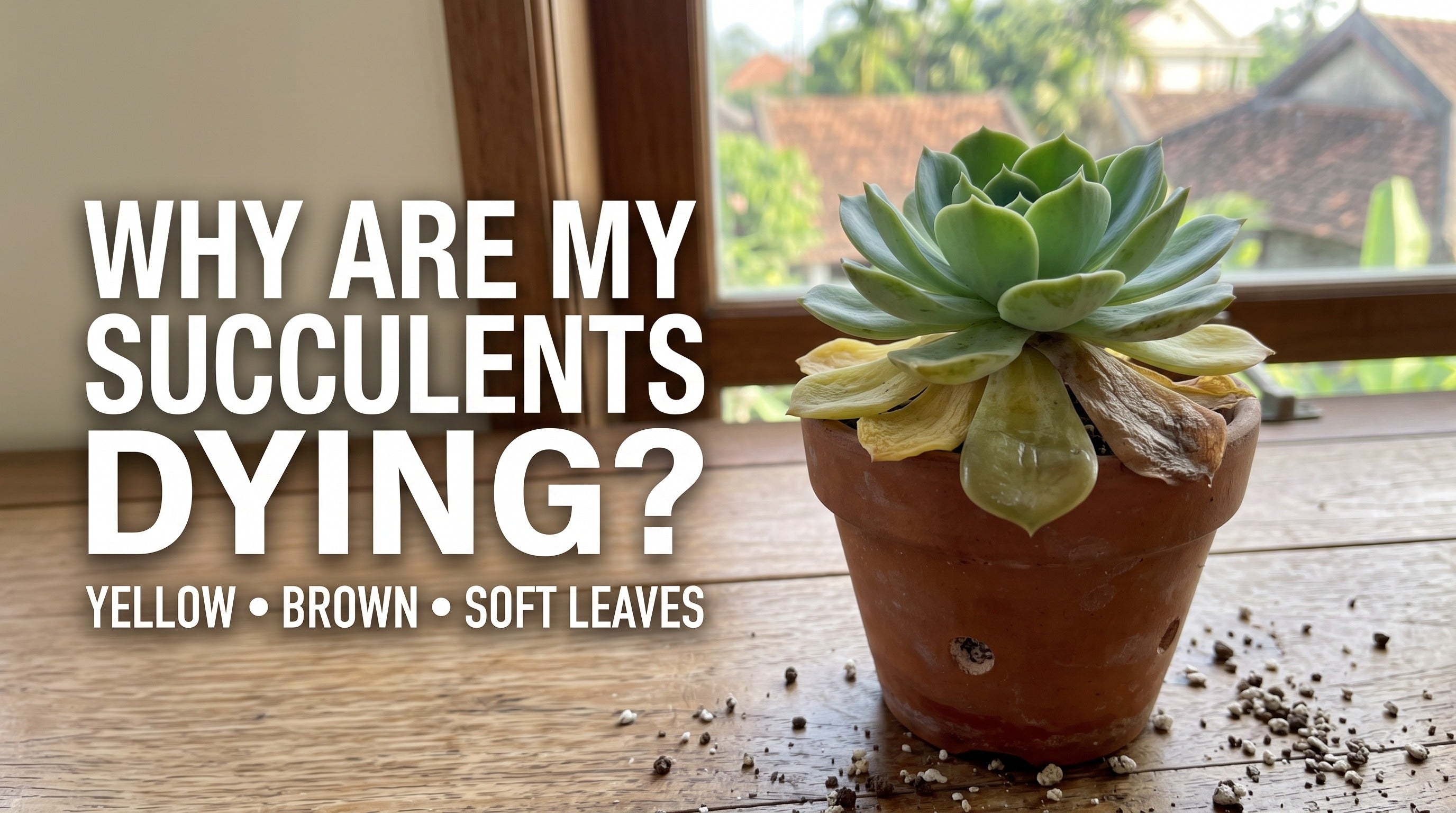
One day your plant may look healthy and full. A few days later, you may notice a yellow leaf, brown spots, or leaves that feel unusually soft.
If you have ever wondered, “Why are my succulent leaves turning yellow, brown, or soft?” you are not alone.
The good news is that leaf discoloration does not always mean your succulent is dying.
Yellow, brown, or soft leaves can be caused by several different factors, including watering problems, poor drainage, insufficient light, temperature stress, natural aging, pests, or root problems.
The key is to look at the entire plant instead of reacting to one symptom.
In this guide, we will explain the most common reasons succulent leaves change color or texture, how to identify the likely cause, and what you can do to help your plant recover.
Is It Normal for Succulent Leaves to Turn Yellow?
Before changing your care routine, take a close look at where the yellow leaves are appearing.
An occasional older leaf near the bottom of the plant may naturally turn yellow, dry out, and fall away.
This is part of the normal aging process.
The problem is more concerning when several leaves turn yellow at the same time, especially when the leaves are also soft, swollen, or falling off rapidly.
Yellowing can have several causes, including too much or too little water, poor drainage, insufficient light, cold temperatures, or sudden environmental changes.
That means yellow leaves should be treated as a clue rather than a diagnosis.
The location of the yellowing, the texture of the leaves, the condition of the soil, and the roots can help you determine what is happening.

1. Overwatering Can Cause Yellow, Soft Succulent Leaves
One of the most common problems with succulents is excessive moisture.
Succulents store water in their leaves and stems, so they generally do not need constantly wet soil.
When the growing medium stays wet for too long, roots may struggle because there is less air available around them.
Prolonged waterlogged conditions can contribute to yellow leaves and root problems.
An overwatered succulent may develop several symptoms:
- Yellow leaves
- Soft or mushy leaves
- Leaves dropping easily
- Brown or translucent areas
- A soft stem
- Wet soil that stays damp for a long time
- Dark or mushy roots
The combination of yellow leaves and soft, swollen foliage is particularly important to notice.
What to Do
First, stop watering until you understand how wet the soil is.
Check the pot and growing medium.
If the soil remains very wet, make sure the container has a drainage hole and that excess water can escape freely.
If you suspect root rot, carefully remove the plant from the container and inspect the roots.
Healthy roots should not be dark, mushy, and falling apart.
If the roots are badly damaged, the plant may need to be cleaned up and replanted in fresh, well-draining growing medium.
Avoid putting a struggling succulent immediately back into constantly moist soil.
2. Underwatering Can Cause Brown, Dry Leaves
Not every brown leaf is caused by too much water.
Succulents can also develop brown, dry, or crispy leaves when they are not receiving enough water.
Underwatering often produces a different texture from overwatering.
Instead of looking swollen and mushy, the leaves may become:
- Wrinkled
- Thin
- Dry
- Crispy
- Shriveled
- Brown around the edges
Lower leaves may dry out first.
Severe dryness can also cause wilting and browning.
What to Do
Check the growing medium before watering.
If the soil is extremely dry and the plant shows signs of dehydration, provide an appropriate watering and allow excess water to drain away.
Do not compensate for prolonged dryness by keeping the soil constantly wet afterward.
Instead, return to a more appropriate watering routine based on the plant, container, soil, temperature, and growing conditions.
3. Poor Drainage Can Keep Your Succulent Too Wet
Sometimes the problem is not how much water you add.
It is how long the water stays in the pot.
A succulent growing in compact or poorly draining soil may remain wet for much longer than expected.
A container without a drainage hole can make the problem even worse.
Succulents generally benefit from growing conditions that allow excess moisture to drain away rather than remaining around the roots.
Signs of a drainage problem may include:
- Soil that stays wet for many days
- Yellowing leaves
- Soft leaves
- Mushy roots
- A soft stem
- Unpleasant odors from the soil
- Repeated problems despite reducing watering
What to Do
Use a container with a drainage hole.
Choose a growing medium designed for cacti and succulents or another mix that drains efficiently.
Avoid relying on a layer of gravel at the bottom of a container as a substitute for proper drainage. Water can still remain in the soil above that layer.
If the current soil stays wet for too long, repotting into a more suitable medium may help.
4. Too Much Direct Sun Can Cause Brown or Burned Leaves
Succulents generally appreciate bright light, but sudden exposure to intense sunlight can cause stress.
This is particularly important when a plant has been growing indoors or in lower light and is suddenly moved into strong outdoor sun.
Sun-stressed leaves may develop:
- Brown patches
- Dry areas
- Bleached areas
- Crispy spots
- Reddish or bronze discoloration in some species
The exact appearance depends on the succulent variety and growing conditions.
What to Do
Avoid moving a low-light succulent directly into intense midday sun.
Instead, increase light gradually.
Give the plant time to adjust to brighter conditions.
If the plant is already showing severe sun damage, move it to a location with bright but less intense light while it recovers.
Remember that different succulent species have different light requirements.
5. Not Enough Light Can Cause Weak, Unhealthy Growth
Insufficient light may not always produce yellow leaves immediately.
Instead, the plant may begin to stretch toward a light source.
This is called etiolation.
You may notice:
- Long spaces between leaves
- A stretched appearance
- Pale growth
- Leaning toward a window
- Smaller new leaves
- Loss of the compact shape
If low light continues, the plant may become weaker and more difficult to maintain.
What to Do
Move the succulent to a brighter location gradually.
A bright window may work well for many indoor succulents, but the ideal light level depends on the species.
Avoid making a sudden jump from very low light to intense outdoor sunlight.
Gradual adjustment is safer.
6. Cold or Sudden Temperature Changes Can Damage Leaves
Temperature can also affect succulent leaves.
A plant exposed to unusually cold conditions may develop soft, dark, or discolored tissue.
Cold damage can sometimes look similar to other problems, making it easy to mistake environmental damage for a watering issue.
Sudden changes in temperature can also contribute to plant stress.
What to Do
Protect sensitive succulents from freezing temperatures and sudden cold exposure.
If your succulent normally lives indoors, be especially careful when moving it outside.
Check the specific temperature tolerance of your species because succulents vary considerably in their cold tolerance.
7. Natural Aging Can Cause Lower Leaves to Turn Yellow
Not every yellow leaf needs treatment.
As succulents grow, older lower leaves may naturally age.
The leaf gradually changes color, dries out, and eventually falls away.
This is generally less concerning when:
- Only one or two older lower leaves are affected
- New growth looks healthy
- The stem remains firm
- The rest of the plant looks normal
- The soil and roots appear healthy
In this situation, there may be no serious problem to fix.
Simply monitor the plant.
Avoid changing your watering or lighting routine dramatically because of one naturally aging leaf.

8. Root Rot Can Make a Succulent Look Like It Needs More Water
Root problems are one of the most important issues to recognize.
A succulent with damaged roots may look dehydrated even when its soil is wet.
This can be confusing.
You may see:
- Yellow leaves
- Wilting
- Soft stems
- Leaf drop
- Slow growth
- Brown or black roots
- Mushy roots
Root rot is commonly associated with excessive moisture and poor drainage.
Wet conditions can create an environment where roots become damaged, reducing the plant's ability to function normally. :contentReference[oaicite:5]{index=5}
What to Do
If the symptoms are severe, remove the succulent from its pot and inspect the roots.
Look for roots that are dark, soft, mushy, or easily damaged.
Remove clearly damaged tissue with a clean cutting tool.
Allow appropriate cut surfaces to dry before replanting, depending on the species and severity of the damage.
Use fresh, well-draining growing medium and a container with drainage.
After repotting, avoid immediately returning to frequent watering.
9. Pests Can Also Cause Discolored Leaves
Water and light are not the only possible causes.
Pests can also affect succulent foliage.
Inspect your plant carefully, especially around:
- Leaf joints
- New growth
- The underside of leaves
- Stem areas
- Crevices between leaves
Look for unusual insects, cotton-like material, sticky residue, webbing, or damaged tissue.
If pests are present, identify the pest before choosing a treatment.
Keeping your succulent healthy with appropriate light, watering, airflow, and growing conditions can also help reduce stress that makes pest problems more difficult to manage. :contentReference[oaicite:6]{index=6}
10. Water Sitting on Leaves Can Contribute to Problems
Watering technique can also matter.
If water frequently sits in tight spaces between leaves, particularly in humid conditions, the plant may have difficulty drying quickly.
This is especially relevant for densely packed rosettes.
Whenever possible, water the growing medium rather than repeatedly soaking the foliage.
Good airflow can also help foliage dry more quickly.
How to Tell if Your Succulent Is Overwatered or Underwatered
This is one of the most common questions from beginner succulent growers.
The easiest way to distinguish the two is to look at both the plant and the soil.
Overwatering is more likely when:
- Soil stays wet
- Leaves are soft or mushy
- Leaves look swollen
- Leaves turn yellow
- Leaves fall off easily
- Roots are dark or mushy
- The stem becomes soft
Underwatering is more likely when:
- Soil is extremely dry
- Leaves are wrinkled
- Leaves feel thin
- Leaves become crispy
- Plant looks dehydrated
- Lower leaves dry and fall away
However, symptoms can overlap.
That is why checking the soil and, when necessary, the roots is more reliable than diagnosing the plant from leaf color alone.
A Simple Succulent Leaf Troubleshooting Checklist
When you notice a yellow, brown, or soft leaf, work through this checklist.
Step 1: Check the Soil
Is it completely dry?
Is it still wet several days after watering?
Step 2: Check the Leaves
Are they soft and swollen?
Or dry and wrinkled?
Step 3: Check the Stem
Is the stem firm?
Or soft and discolored?
Step 4: Check the Light
Has the plant recently moved?
Is it receiving much stronger or weaker light than before?
Step 5: Check the Roots
If symptoms are severe, carefully inspect the roots.
Are they firm and healthy?
Or dark and mushy?
Step 6: Check for Pests
Look closely at the leaves, stems, and growing points.
Step 7: Think About Recent Changes
Ask yourself:
Did I recently repot the plant?
Did I move it to a new window?
Did I increase watering?
Did the temperature change?
Did the plant stay outside in heavy rain?
Recent changes can provide an important clue.
How to Help a Succulent Recover
Once you identify the likely cause, avoid making several major changes at once.
For example, if you suspect overwatering, do not simultaneously move the plant into full sun, fertilize it heavily, repot it repeatedly, and water it again.
Too many changes can create additional stress.
Instead, make the most important correction first.
If the soil is staying wet, improve drainage and allow the plant to dry appropriately.
If the plant is severely underwatered, address its hydration needs.
If the problem is light-related, adjust the lighting gradually.
If roots are damaged, focus on removing the damaged tissue and providing a suitable growing environment.
Recovery can take time.
Damaged leaves may not return to their original appearance.
Instead, look for healthy new growth as one of the best signs that the plant is improving.
When Should You Remove Yellow or Brown Leaves?
You do not always need to remove a damaged leaf immediately.
If a leaf is naturally aging and drying out, you can allow it to detach on its own.
If a leaf is completely dead, gently remove it when it comes away easily.
For leaves affected by severe rot or disease, removal may be appropriate to prevent damaged tissue from remaining in contact with healthy parts of the plant.
Do not pull firmly on a leaf that is still strongly attached.
You can damage the plant unnecessarily.
Instead, use clean tools when cutting is necessary.
How to Prevent Succulent Leaves From Turning Yellow or Soft
Prevention is easier than trying to rescue a severely damaged plant.
Start with the basics.
Use a container with drainage.
Choose an appropriate succulent growing medium.
Give the plant suitable light.
Water according to the plant's actual needs rather than following a rigid calendar.
Allow the growing medium to dry appropriately between waterings for species that require dry periods.
Avoid leaving the pot sitting in water.
Provide adequate airflow.
Monitor temperature during extreme weather.
Inspect your plants regularly for pests.
Most importantly, learn the specific requirements of the succulent you are growing.
A Haworthia, Echeveria, Aloe, Sedum, and other succulent types may have different preferences.

Final Thoughts
Yellow, brown, or soft succulent leaves are not always a sign that your plant is dying.
Sometimes a single lower leaf is simply reaching the end of its natural life.
Other times, the symptoms are telling you that something in the growing environment needs to change.
Overwatering, poor drainage, underwatering, excessive sunlight, insufficient light, temperature stress, pests, and root problems can all produce different types of leaf damage.
The best approach is to slow down and investigate.
Check the soil.
Look at the leaves.
Inspect the stem.
Consider the light.
Think about recent changes.
And if the symptoms are serious, check the roots.
Once you understand what the plant is telling you, it becomes much easier to make the right correction.
Healthy succulent care is not about following a perfect watering schedule.
It is about observing your plant and adjusting its growing conditions when necessary.
If you are also interested in growing new succulents from existing plants, read our guide to How to Propagate Succulents from Leaves and Cuttings for beginner-friendly propagation tips.