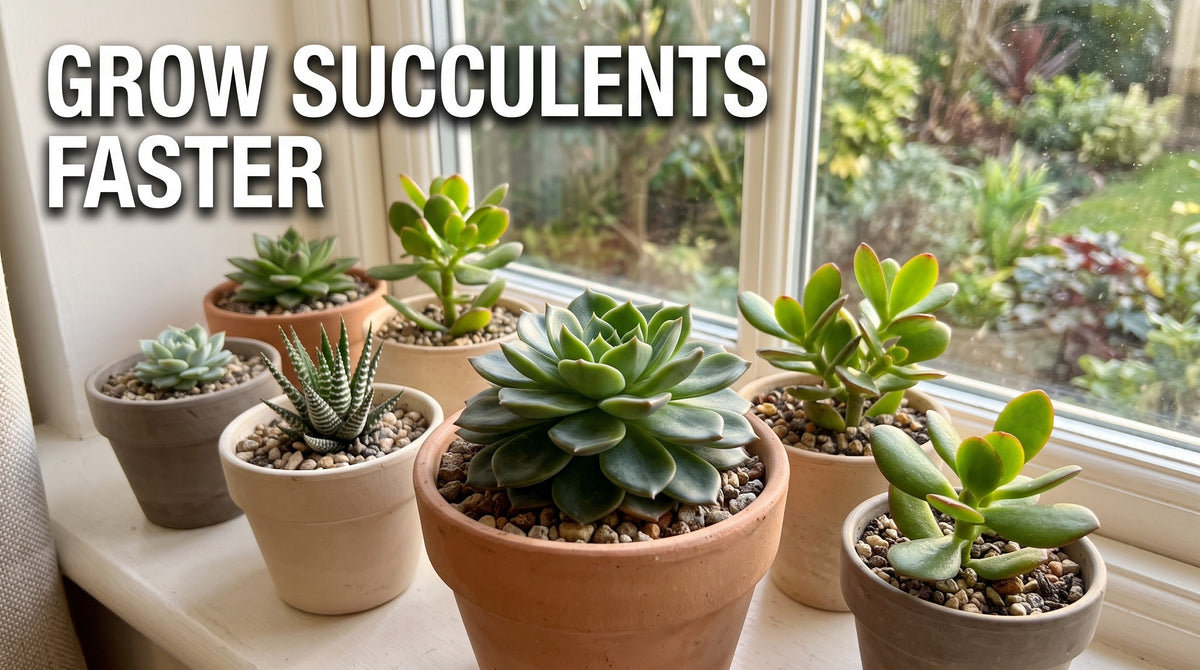
How to Make Succulents Grow Faster and Healthier: 10 Simple Tips
Succulents are known for being low-maintenance plants, but “low-maintenance” does not mean they cannot grow slowly, become stretched, or stop producing new leaves. If your succulent seems stuck, the problem is often not the plant itself. It may simply need better light, a more suitable growing medium, improved watering habits, or a little more attention during its active growing season.
The good news is that you usually do not need complicated products or a strict daily routine to encourage healthier succulent growth. The goal is to create conditions that match what your particular succulent needs.
In this guide, you will learn how to make succulents grow faster and healthier with practical tips that are easy to follow, whether you grow them indoors, on a windowsill, on a balcony, or outdoors.
-
Give Your Succulent Enough Light
Light is one of the most important factors affecting succulent growth.
Many succulents naturally grow in bright environments, so a dark corner of the house may not provide enough energy for strong, compact growth. When light is insufficient, some succulents may become stretched, develop wider gaps between leaves, or grow toward a nearby window.
Start by choosing a bright location that matches your plant's specific needs. A sunny windowsill can work well for many varieties, while others may prefer filtered or partially shaded light.
If you are moving a succulent from a lower-light location into stronger sunlight, make the transition gradually. A sudden change can stress the plant and may cause sun damage.
For indoor growers, a quality grow light can also be useful when natural sunlight is limited.
The key is not simply to give every succulent as much sunlight as possible. Different species have different light requirements, so observe your plant and adjust its location when necessary.

-
Use Fast-Draining Soil
Healthy roots are essential for healthy growth.
Succulents generally perform best in a growing medium that drains efficiently rather than staying wet for long periods. Heavy, compacted soil can hold too much moisture around the roots and create an environment where root problems become more likely.
Choose a commercial cactus and succulent mix or create a porous mix appropriate for your plant.
A good succulent mix should allow excess water to move away from the roots while still providing enough structure for the plant to establish itself.
If the soil remains wet for a long time after watering, that is a sign that the growing medium or container setup may need attention.
Remember that faster growth does not come from keeping the soil constantly moist. For succulents, healthy roots need a balance of moisture and air.
-
Choose a Pot With Drainage
Even excellent soil will not perform well if excess water has nowhere to go.
Whenever possible, grow container succulents in pots with drainage holes. This allows excess water to escape after thorough watering.
The size of the container also matters. A pot that is much larger than the root system can hold more moisture than the plant needs, especially if the soil mix is not very porous.
When repotting, choose a container that gives the roots enough room to develop without dramatically increasing the amount of wet soil around them.
Terracotta pots can also be useful for succulent growers because their porous walls allow moisture to evaporate more readily than some nonporous containers.
The best pot is not necessarily the prettiest one. It is the one that helps you maintain an appropriate root environment.
-
Water Thoroughly, Then Let the Soil Dry
One of the biggest mistakes succulent beginners make is watering too frequently.
Succulents store water in their leaves and stems, so they generally do not need constantly moist soil.
Instead of watering according to a fixed calendar, check the soil and consider the plant's growing conditions. When watering is needed, water thoroughly enough that excess water flows from the drainage hole. Then allow the growing medium to dry appropriately before watering again.
How quickly the soil dries depends on several factors, including the plant, pot size, soil mix, temperature, humidity, season, and amount of light.
A succulent growing in bright light may use water faster than the same plant sitting in a cool, dim location.
The goal is not to give the plant as little water as possible. The goal is to give it the right amount at the right time.
-
Feed During Active Growth
Succulents do need nutrients, even though their fertilizer requirements are generally modest.
If your succulent is actively growing, occasional feeding can provide nutrients that support new leaves, stems, and overall development.
Use a fertilizer formulated for succulents or follow the instructions for a suitable houseplant fertilizer. Avoid assuming that more fertilizer will automatically produce faster growth.
Overfertilizing can cause problems, especially when plants are stressed or growing in poor conditions.
A gentle feeding approach during the plant's active growing period is usually more appropriate than frequent heavy applications.
Always follow the fertilizer label and adjust feeding according to the plant's species and growing conditions.
-
Keep the Plant Warm Enough for Active Growth
Temperature can influence how actively a succulent grows.
Many commonly grown succulents prefer warm conditions during their active growing period, although the ideal range varies considerably between species.
Cold temperatures can slow growth, and some succulents naturally enter a period of reduced activity depending on the season.
Instead of trying to force growth throughout the entire year, learn whether your particular succulent has a seasonal growth pattern.
During periods of active growth, provide suitable warmth, adequate light, and appropriate watering. During slower periods, avoid trying to compensate with extra water or fertilizer.
Healthy seasonal growth is better than forcing a plant to grow when its natural conditions are telling it to rest.
-
Give the Roots Room to Breathe
Healthy roots need more than water and nutrients. They also need access to air within the growing medium.
This is another reason why compacted or constantly wet soil can interfere with healthy succulent growth.
If your soil has become dense over time, water may drain poorly and the roots may remain in an unfavorable environment.
When repotting becomes necessary, gently inspect the root system and replace old or unsuitable growing media with a fresh, well-draining mix.
Do not repot simply because you want the plant to grow faster. Repot when the container, roots, or growing medium indicate that a change is useful.
A healthy root environment gives the plant a much better foundation for producing new growth.

-
Remove Dead Leaves and Damaged Growth
Succulents naturally lose older leaves, and removing completely dead material can help keep the plant clean and easier to inspect.
Check the base of the plant regularly for dried leaves, damaged tissue, or debris trapped between leaves.
Use clean, sharp scissors when pruning is necessary.
However, do not remove healthy leaves simply because you want the plant to produce new ones faster. Succulent leaves are storage organs, and healthy foliage continues to contribute to the plant's overall condition.
Focus on removing material that is genuinely dead, damaged, or creating a hygiene problem.
-
Watch for Pests and Early Signs of Stress
A succulent that suddenly stops growing may be responding to a problem rather than simply needing more fertilizer.
Check your plant regularly for signs such as unusual spots, damaged leaves, sticky residue, webbing, cotton-like insects, or changes in growth.
Also look at the soil and the base of the plant.
If leaves are becoming soft, the soil stays wet for unusually long periods, or the plant develops dark or damaged areas near the base, investigate the roots and growing conditions rather than immediately adding more water.
Root problems can seriously interfere with growth. If you notice signs that suggest root rot, use this related guide: “How to Identify and Treat Common Succulent Pests.”
For a more detailed guide specifically focused on root rot, see our article “Succulent Root Rot: Causes, Signs, and How to Save Your Plant.”
Early attention is often much easier than trying to correct a serious problem later.
-
Give Your Succulent Time to Grow
One of the most overlooked succulent growth tips is patience.
Succulents are not naturally fast-growing plants in the same way as many tropical houseplants. Their growth rate also varies greatly between species.
A healthy succulent may produce new leaves slowly, especially during a seasonal rest period.
Instead of measuring progress from one day to the next, take a photo every few weeks under similar lighting. This makes small changes easier to notice.
Look for healthy signs such as new leaves, firm foliage, stable color, developing offsets, or gradual increases in size.
If your plant is receiving appropriate light, growing in well-draining soil, being watered correctly, and showing no obvious signs of pests or disease, slow growth may simply be normal for that particular variety.
How to Create the Best Conditions for Faster Succulent Growth
If you want to make succulents grow faster and healthier, focus on the entire growing environment rather than one single trick.
Think of succulent care as a simple system:
- Bright, appropriate light
- Well-draining soil
- A pot with drainage
- Correct watering
- Moderate feeding during active growth
- Suitable temperature
- Healthy roots
- Regular observation
When these conditions work together, your succulent has a much better opportunity to produce healthy new growth.
What Not to Do If You Want Faster Succulent Growth
Trying to speed up succulent growth can sometimes create the opposite result.
Avoid keeping the soil constantly wet.
Avoid placing a light-loving succulent in a dark corner.
Avoid applying large amounts of fertilizer.
Avoid moving a plant suddenly from shade into intense direct sunlight.
Avoid using a very large pot simply because you want the roots to grow more quickly.
Avoid watering on a rigid schedule without checking the growing conditions.
And avoid comparing the growth rate of one succulent with another species. Different plants naturally grow at different speeds.
A healthier plant is usually a better goal than simply a faster-growing plant.
Indoor vs. Outdoor Succulent Growth
Indoor succulents can grow very well when they receive enough light and have good air movement and drainage.
However, indoor conditions can sometimes provide less light than succulents would naturally receive outdoors.
If a plant becomes stretched or produces unusually weak growth, reassess its light level before increasing fertilizer or water.
Outdoor succulents may receive much stronger light and experience greater changes in temperature, wind, and rainfall. If you move an indoor plant outdoors, introduce it to stronger light gradually instead of exposing it immediately to intense sun.
Outdoor conditions can also change how frequently the plant needs water, so continue checking the soil rather than relying on your indoor watering routine.

A Simple Weekly Succulent Growth Check
You do not need to spend hours caring for your succulents.
Once a week, take a few minutes to check:
Is the plant receiving the right amount of light?
Does the soil look and feel appropriately dry or moist?
Is water draining freely from the container?
Are there any soft, damaged, or discolored leaves?
Are there signs of pests?
Is the plant producing new growth?
Has the plant become stretched toward the light?
This simple inspection can help you identify small problems before they become major ones.
Final Thoughts
Learning how to make succulents grow faster is less about finding a secret growth hack and more about creating the right environment.
Give your succulent appropriate light, use a well-draining growing medium, choose a pot with drainage, water thoughtfully, feed moderately during active growth, and pay attention to the plant's natural seasonal rhythm.
Most importantly, remember that healthy growth is not always fast growth. A compact, firm, steadily developing succulent is generally a better sign than a plant that is being pushed to grow quickly under excessive water or fertilizer.
With consistent care and a little patience, your succulents can develop stronger roots, healthier foliage, and attractive new growth over time.